Well, Summer has finally arrived and, in between the showers, tennis.
If you have been watching this year’s games at Wimbledon or perhaps the qualifying tournaments that start the whole season’s sporting jamboree going, then you may have been aware of the great variety of women’s tennis costumes, noticeable in some of the tournaments, particularly at Eastbourne, where the range of dress styles and colours was perhaps sometimes quite eccentric. The simplicity of the dress code for players at Wimbledon may well seem quite sensible if you find the variety at other venues not to your liking.
If you have been watching this year’s games at Wimbledon, or perhaps the qualifying tournaments that start the whole season’s sporting jamboree, then you may be aware of the great variety of women’s tennis costumes. Noticeable in some of the tournaments, particularly Eastbourne, the range of dress styles and colours was perhaps sometimes quite eccentric. The simplicity of the dress code for players at Wimbledon, only white, may well seem quite sensible if you find the variety at other venues rather distracting.
Could you play a game of tennis in this?
Things have certainly changed since 1891 when the design for a woman’s tennis dress (shown here), was designed by the female artist Madame Starr Canziani. Her comment on contemporary dress was that it could be picturesque or even quaint, but that the highest laws of beauty should consider fitness for purpose as well. Somehow, I suspect that the sun hat accompanying her costume would not prove popular with present-day players who, I feel sure, would prefer a peaked cap and a cut that allowed for greater speed and movement. Imagine playing in gloves!
And now, travelling forward in time to 2022, as we mentioned in the May Newsletter, we are giving just one live lecture each month from June through to August. The live lectures are a good way of keeping in touch with you all in addition to the Newsletter each month. In September, the normal series lectures will resume as usual. However, if you are feeling starved of art and design culture, please remember that there are numerous free talks on the open-access section of the Anne Anderson Art and Design History Channel on YouTube. Just copy and paste the Channel title into Google, or which ever browser you use, and that should take you there. We hope to be adding more material to the Channel over the summer.
The Live Lecture for July
Art Nouveau and Art Deco
inLjubljana
To be given on Friday 22nd July 2022 at 11.00 am and repeated at 7pm
Ciril Metod Koch Cuden house
One of the tasks I find most enjoyable is researching new art tours. Back in 2019, following a successful tour looking at Liberty style architecture in Turin and Milan, I began looking further afield for cities that offered a wealth of Art Nouveau and Art Deco buildings. Having a good knowledge of the Vienna Secession I was already familiar with the Slovenia born architects Max Fabiani and Jože Plečnik. A protégé of Otto Wagner, Fabiani cultivated his interest in town planning. Badly damaged in a devastating earthquake in 1895, Fabiani was appointed the principal planner for the rebuilding of the Slovenian capital. Ljubljana was transformed from a sleepy provincial town into a modern city. In 1899-1902 Fabiani laid out Miklošicev park (or Miklošic Park) and conceived the surrounding buildings; Bamberger house and the Krisper house are very pretty Art Nouveau houses. Ciril Metod Koch added the Cuden house, making this area a must for the Art Nouveau tourist.
Krisper house
However, it was Giorgio Zaninovich who designed the iconic Dragon Bridge (1901), one of the city’s most famous attractions, offering tourists a perfect photographic opportunity.
After the First World War, it was Plečnik who completed the transformation of the national capital.
Plečnik’s legacy in Vienna includes the Zacherlhaus, one of the first modern buildings erected in the city centre and the remarkable Church of the Holy Spirit constructed from concrete. Following this success, Plečnik left for Prague having been appointed chief architect for the renovation of Prague Castle. When the Ljubljana School of Architecture was established in 1921, Plečnik was called home. He then set about transforming the capital with a series of monumental projects with the famous Tromostvoje (or Triple Bridge) and Central Market at the heart of his urban planning.
Central Market
The National and University Library, considered his masterpiece, was completed after the Second World War.
National and University Library
I was able to take my first Travel Editions tour to Ljubljana in last March. Hopefully you will be able to join me for this one-hour live lecture which will take you around the best Art Nouveau and Art Deco buildings in the Slovenian capital.
How to book
To be given on Friday 22nd July 2022 at 11.00 am and repeated at 7pm
The cost of the lecture is £10 for this session. You can book this live lecture for either the morning or the evening presentation.
Please ask for ‘Morning Lecture’ or ‘Evening Lecture’ when you book your choice as the sessions have different Zoom entry codes.
You can pay by cheque or BACS (details will be supplied). Cheques should be made payable to Anne Anderson.
Or you can pay directly through Paypal
One lecture
Art Nouveau and Art Deco in Ljubljana
£10.00
Once you register and pay, you will be sent a separate email with your link. You will need this link to access the lecture on the day so please do not delete it.
After the lecture you will be sent another private link so you can access the lecture on my YouTube Channel.
The lectures will be delivered live by Zoom. They will be uploaded afterwards to my YouTube channel for a limited time and you will be provided with a private link to view them again at your leisure.
The lectures last for around an hour. Lecture start times are in BST.
There will be a question-and-answer session at the end. As the lectures will be delivered live by Zoom, you will be able to ask your questions in person at the end. You can also use the ‘Chat’ function.
I will be repeating the morning lecture in the evening of the same day for those people unable to make the morning slot. Both lectures (morning and evening) will be delivered live and you will be able to ask questions in person at the end.
Join me in this lecture to enjoy some of the historic culture that this city has to offer.
Watch the latest free access video talk on The Channel!
If you would like to see and hear Anne’s reflections on curating the major UK exhibition Beyond the Brotherhood – The Pre-Raphaelite Legacy, staged in 2019-2020, this short video, the latest addition to the Anne Anderson Art and Design History Channel might be worth a look.
Just click on the Watch Now button below to take you to the talk.
Some news for those of you who are interested in the art and heritage tours, in the UK and/or abroad, that Scott and I undertake through the Travel Editions company. Following a successful run of UK tours in 2021,Travel Editions is running many of its tours this summer. Below are listed some of the tours scheduled for later this year.
In July
From Victoriana to Art Nouveau 29-31 July (based in Northampton)
Featuring a visit to 78 Derngate, Northampton, Charles Rennie Mackintosh’s only significant English work, and The Higgins Art Gallery, Bedford to see the outstanding collection of painted furniture by Victorian architect William Burges and the Gallery’s exceptional range of decorative arts objects and prints. For further details please visit the Travel Editions website: https://www.traveleditions.co.uk to check booking details etc.
In August
Monet in Normandy 5-8 August (travel by Coach, based in Normandy) Hampshire Arts and Crafts 11-13 August (based in Basingstoke) Gothic Castles to French Impressionism 15-17 August (based in Cardiff) William Morris 23-25 August (based in Blunsdon)
In September
Arts and Crafts in Sussex 7-9 September (based in Brighton) Victorian Treasures of Yorkshire 16-18 September (based in Hilton Leeds City Hotel) – a new tour for 2022.
Lotherton Hall
Lotherton Hall
In this exciting new tour as well as visiting Leeds to appreciate some of its Victorian architectural splendour we will also be exploring the wonderful 19th-century art and design collections at Lotherton Hall, where you will find a magnificent Gothic style grand piano designed by Charles Bevan and made for Titus Salt Junior, son of the Victorian industrialist Titus Salt.
Victorian Interior at Lotherton Hall
Burmantofts Pottery at Lotherton Hall
Also on view are numerous fine examples of ceramics made by the Leeds firm of Burmantofts Faience in the late Victorian period.
Burmantofts pottery is much sought after by collectors in the present day and several rare examples, such as the one shown here, by the previously unidentified artist who signed his work with the initials ‘LK’ are on display in the museum. The identity of this pottery painter was only finally revealed as recently as 2004 in a publication by Scott Anderson.
Burmantoft pottery. Not De Morgan!
Other sites to be visited as part of this tour include Brodsworth Hall and Cannon Hall near Barnsley. For further details please visit the Travel Editions website: https://www.traveleditions.co.uk to check booking details etc.
Thanks to all of you who have watched films on the Anne Anderson Art and Design History Channel and particularly to those who have remembered to press the SUBSCRIBE button beneath the video window. It does not commit you to anything but helps with my stats. Thank you.
Processing…
Success! You're on the list.
Whoops! There was an error and we couldn't process your subscription. Please reload the page and try again.
Amidst the bustle of Sloane Square and the King’s Road, Holy Trinity offers an oasis of calm. It is also one of the most beautiful churches in England. One looks up in awe at the magnificent east window, the largest stained-glass window produced by Morris & Co. With magnificent sculptures by Frederick William Pomeroy and Henry Hugh Armstead, the richly decorated interior recalls the splendour of late Medieval-Renaissance churches. The architect John Dando Sedding was highly principled, believing architecture was a divinely inspired art closely bound to craftsmanship.
Exterior, Holy Trinity Church, Sloane Street.
‘The cathedral of the Arts & Crafts Movement’.
Sir John Betjeman
‘There is hope in honest error, none in the icy perfections of the mere stylist.’
John Dando Sedding
The Architect: John Dando Sedding 1838-1891
‘He formed the first bridge between the architects’ camp and that of handicraft proper.’
Hermann Muthesius, German architect, and writer.
Sedding’s outlook was shaped by Ruskin’s ‘The Nature Gothic’, which was published in The Stones of Venice (1853). Following in the footsteps of William Morris and Philip Webb, he joined the offices of the Gothic Revival architect George Edmund Street (1824-1881), best known for the Royal Courts of Justice on the Strand. Street’s practise was a cradle for the fledgling Arts and Crafts movement. One of Sedding’s first churches was the Anglo-Catholic St Martin’s, Low Marple, Cheshire completed in 1872. The interior was designed by William Morris with contributions from Dante Gabriel Rossetti, Ford Madox Brown, Edward Burne-Jones and William Holman Hunt. When Sedding set up his practise in London, he took offices on the upper floors of 447 Oxford Street, next door to the premises of Morris & Co.
Meeting Ruskin in 1876, Sedding took to heart his injunction to ‘always have pencil or chisel in hand if he were to be more than an employer of men on commission.’ Taking a dedicated interest in the crafts, he gathered a team of masons, carvers, and modellers. His aim was to revive the medieval system of cooperation between architect and craftsman.He exerted a remarkable influence over his workmen, encouraging them to draw from nature. He was tireless in studying and drawing flowers, leaves and animals from life. These studies provided the basis for his ornamental designs. He also encouraged is craftsmen to study old buildings, focusing on craft techniques. He was always closely involved in building practices, directly supervising his team of craftsmen. Not surprisingly he was a founder member of the Art Workers’ Guild in 1884. He was elected its second Master in 1886.
Favouring the curvaceous forms of late-Perpendicular Gothic, Holy Trinity blends together a heady mix of Byzantine, Italian Renaissance, Art Nouveau and Arts and Crafts! The pulpit was designed in the Sienna Renaissance style, being made of different coloured marbles and supported on columns of red marble and alabaster. The baldachin, supported by four Ionic columns of red porphyry, is also in the Italian Renaissance style. Yet the ironworks gates and their wings, that enclose the chancel, reflect the naturalism of the Arts and Crafts style. In their curvilinear forms they seem to look ahead to French Art Nouveau.
Ironwork Gates and wings, designed by Sedding and manufactured by Henry Longden
Sedding exerted a profound influence over a younger generation of architect-craftsmen, with Ernest Gimson and Ernest Barnsley both entering his offices. Charles Rennie Mackintosh adopted Sedding’s caveat:
‘There is hope in honest error, none in the icy perfections of the mere stylist.’
Plaque commemorating Sedding, who died in 1891 by F W Pomeroy. The gift of the Art Workers’ Guild.
Henry Wilson
Dying prematurely, Sedding’s assistant Henry Wilson, oversaw the decoration of Holy Trinity. Although he followed Sedding’s ideals, his designs were more inventive. Stylistically Wilson preferred Romanesque and Byzantine forms to Gothic. He favoured rich materials, especially coloured marbles and mosaic work. He was a gifted craftsman, specialising in metalwork, church plate and furnishings, jewellery, and sculpture. A member of the Art Workers’ Guild from 1892, he was elected Master in 1917. Part of William Lethaby’s circle, he taught at the Central School of Arts and Crafts from 1896. He also taught metalwork at the Royal College of Art.
Wilson served as President of the Arts and Crafts Exhibition Society from 1915 to 1922. One of his greatest achievements was staging a landmark Arts and Crafts Exhibition at the Royal Academy in 1916. Wilson conceived the inventive layout, transforming the conventional galleries into a series of rooms: civic, ecclesiastical, a ‘house’, with seven ‘delightful interiors’, a weaving room, a treasury for silverwork and jewels and a retrospective room dominated by the works of William Morris and Burne-Jones. Throughout the 19th century the RA had scorned the decorative arts, retorting ‘surely you don’t expect us artists to allow our galleries to be turned into a furniture shop?’
Wilson designed the strapwork screen behind the altar in the Lady chapel, which was carried out by Nelson Dawson (1859-1941). A watercolour painter, potter, jeweller, silversmith, metalworker, etcher, print-maker and writer on artistic subjects, Dawson’s reputation has probably suffered because he spread his talents too thinly. Alongside his wife, Edith Robinson, he was one of the key figures in the Arts and Crafts movement.
Lady chapel
Sculpture
The church is so richly decorated due to the patronage of George, 5th Earl Cadogan (1840-1915) and his wife Beatrix As Lord of the Manor of Chelsea, Cadogan initially funded the entire project.
The lectern breaks with tradition being supported by a magnificent angel with great sweeping wings rather than an eagle. A sketch for the lectern is in the RA collection.
Henry Hugh Armstead (1828-1905) is best known for carving the figures of the poets, painters and musicians on two sides of the Albert Memorial. His association with George Gilbert Scott, overall designer of the Albert Memorial, continued with Armstead working on the external sculptures of the Foreign and Colonial office, Whitehall. He also carved eighteen oak panels for the Queens’s Robing Room, in the Palace of Westminster, illustrating the legend of King Arthur. They sit below the painted murals by William Dyce.
Lectern by Henry Hugh Armstead
Lectern by Henry Hugh Armstead, detail
Frederick William Pomeroy (1856-1924) was a leading artist in the ‘New Sculpture’ movement which flourished c. 1880-1914. The term was coined by the art critic Edmund Gosse, who published a four-part series in the Art Journal (1894) on the impact of naturalism on modern British sculpture. The catalyst for this shift from neoclassicism to naturalism is said to be Frederic Leighton’s An Athlete Wrestling with a Python (1877), It reflected his interest in a more dynamic and vibrant representation of the human body. The same could be said for Pomeroy’s angels sitting on pillars to either side of the chancel gates. The angels appear to be joyously singing from their long song scrolls.
Singing Angels by F W Pomeroy
Singing Angels by F W Pomeroy
Pomeroy, the son of an artist-craftsman, was articled at a young age to a firm of architectural stone masons. Later he was taught by Jules Dalou, a leading player in the shift to naturalism. After studying at the RA schools, Pomeroy won a travel scholarship allowing him to study Paris. He joined the Art Workers’ Guild in 1887 and began exhibiting at the Arts and Crafts Exhibition Society. At this time he met Sedding who would commission sculptural works for the Church of Our Most Holy Redeemer, Clerkenwell, for the tower of St Clements Church, Bournemouth as well as the angels and choir stalls for Holy Trinity. In 1907 Pomeroy was elected Master of the Art Worker’s Guild.
“Pomeroy’s decoration of the choir stalls [is] one of the most important cycles of sculpture carried out in the late nineteenth century.” — Peyton Skipwith.
The Lectern
The lectern commemorates Beatrix Jane, Lady Cadogan, who died in 1907 (@NPG Ax27655).
Countess Cadogan
It was given by the Upper Chelsea Branch of the Girl’s Friendly Society, of which she was President (1907). The hand wrought iron, steel and brass lectern is said to be designed/made by John Williams of Hornsey. Committed to her charity work, Countess Cadogan assisted at the Irish Industries Association Bazaar, held at Londonderry House, London, in 1895. In this she was supporting her husband who served as Lord Lieutenant of Ireland (1895-1902). She clearly took an interest in the crafts revival then taking place in Ireland.
Lectern by John Williams
Hand wrought iron, steel and brass lectern
Stained glass: Morris & Co. window
A collaboration between William Morris and Edward Burne-Jones, this is said to be the largest window ever made by Morris & Co. With forty-eight figures, it also contains the largest number of single subjects. The ‘thousands of bright little figures’, as conceived by Burne-Jones, depict Apostles, Patriarchs, Kings, Prophets, and Saints. The tracery above features Angels; Works of Charity; Adam and Eve in the Garden of Eden; the Fall; the Annunciation, Nativity, and Crucifixion. The Nativity can be seen at the very top of the tracery. Morris would have designed the scrolling foliate backgrounds. The figure of St Bartholomew has also been attributed to him.
Morris & Co. East Window
Stained Glass, South Aisle:Christopher Whall
Christoper Whall (1849-1924), a leader in the Arts and Crafts movement and a key figure in the history of stained glass, completed eight windows at Holy Trinity. Two windows in the South aisle and six clerestory windows.
Against his parents’ wishes he enrolled at the Royal Academy Schools in 1867. In 1874 he met the architect and designer Arthur Heygate Mackmurdo, later a founder of the Century Guild. He would contribute to the Hobby House, the Guild’s publication, also edited by Selwyn Image. During an extensive study tour of Italy, he converted to Roman Catholicism. Back in London by 1879, he struggled to establish himself as an artist. He designed a few stained glass windows for John Hardman & Co. and James Powell & Sons which led to a life-changing decision. Taking Ada Cottage, Blackbrook, Dorking, Whall transformed a shed into a workshop. Here he set about learning all the processes of the craft: cutting, painting, firing, and glazing, so that, no part of the making of his windows would be out of his control. This challenged the division of labour, then almost universally prevalent among commercial manufacturers, which Whall and others saw as incompatible with the status of stained glass as an art rather than simply a trade.
His designs were shown by the Arts and Crafts Exhibition Society, at the New Gallery, in 1888/89 , which brought him to the attention of Sedding. It was Sedding who gave Whall his first independent commission, for the Lady Chapel East window of St Mary’s church, Stamford, which he completed in 1891.
While advocating a return to craft skills, Whall also experimented with new types of glass in his windows, such Edward Prior’s ‘Early English’ glass, a slab glass which was intended to recreate the ‘luminosity and varied colouring of early medieval glass’. Interested in colours and textures, Whall’s use of white glass was unique at the time.
Adoration Window
Three light window designed by Whall and made by him in collaboration with his pupils and assistants, using the workshops of Messrs Lowndes & Drury of 35 Park Walk, Chelsea.
The light from the Star of Bethlehem divides the window in half, with the three Magi on the left and the shepherds on the right accompanied by an angel.
The window was donated by Mrs E Harvey in memory of her husband, Edmund Harvey, who died in 1898.
Adoration Window
Adoration Window, centre panel
The Holy Spirit and the Pentecost,Francis Cook Memorial Window, Christopher Whall, 1907
A four light window designed by Whall and made with the collaboration of his pupils and assistants at his newly established studio-workshop at 1 Ravenscourt Park, Hammersmith.
The coming of the Holy Spirit takes place on the Jewish day of the festival of the Pentecost, commemorating the giving of the Law at Sinai. Pentecost (meaning fifty), signifying the birth of the church, followed fifty days after Easter. John, Chapter 3, verse: ‘The wind bloweth where it listeth and thou hearest the sound thereof, but canst not tell where it cometh, and whither it goeth: so is everyone that is born of the Spirit’
The Spirit came with the sound of the wind and fire. The Spirit’s coming empowered the people with tongues of fire which symbolised ‘speech’.
The Holy Spirit and the Pentecost
The Holy Spirit and the Pentecost
Stained Glass, North Isle: William Blake Richmond
William Blake Richmond (1842-1921), named in honour of the painter-poet William Blake, is best known for creating the mosaics in St Paul’s Cathedral, a task which took many years to complete (1891-04). Working with James Powell and Sons, glass makers, brought him into contact with the artist-craftsmen associated with the fledging Art and Crafts Movement. He would be elected Master of the Art Worker’s Guild in 1891.
Critical of the blandness of many English churches, declaring they were ‘caves of white-washed sepulchres, uncoloured, or if coloured at all, only in parts, patchily, and with little general idea of design’, he wanted to revive the vibrant colours of Byzantine and early Christian work he had seen in Italy. He was able to put his ideas into practice when he began work on the quire and apse of St Paul’s, acting as both designer and craftsman for the installation of the mosaics. Richmond abandon the flat surface favoured by previous mosaicists, such as Salviati & Co., in favour of a more daring application. Jagged, irregular glass tesserae were set at angles to the surface, so that they would catch the light. The result was controversial.
Richmond translated his experiments with mosaics into his designs for windows. He collaborated with Harry James Powell of James Powell and Sons, in developing new colours. The new, heavier glass, often with light streaks of colour, was used to good effect at Holy Trinity. Three windows were installed between 1905-1910.
Virtues window
Each Virtue is represented by a Patriarch/Saint with below an important scene from their lives
(a)’Love and Hope’ appears above St Louis of France and the scene below depicts him as a splendid knight and ideal Christian monarch.
(b) ‘Justice’ appears above Alfred King of England and the scene below depicts him as lawmaker.
(c) “Wisdom” appears above Abraham Patriarch and the scene below depicts his receiving the divine message from the Lord.
(d) “Fortitude” appears above St. Paul of Tarsus and the light below depicts his spectacular moment of conversion.
(e) “Patience” appears above St. Francis of Assisi, and below his vision of an angel.
(f) “Faith” appears above St Austin Archbishop and the scene below shows him voyage in a boat to convert the inhabitants of Britain.
William Blake Richmond, Virtues Window
‘Youth, its Sacrifices and Joys’ is the theme for the central window:
Inscription reads: Panels from left to right: In Thee God I put My Trust; Speak for thy servant heareth; I am the Light of the World; Before Abraham was I am; Children in whom there was no blemish.
(1) top: David soothing Saul with music; bottom: Salome dancing, with the head of John the Baptist presented to Herod (In Thee God I put My Trust).
(2) top: Samuel responding to the divine call in the temple; bottom: Mary in the carpenter’s shop(Speak for thy servant heareth).
(3) Centre: figure of the young Christ rising over all the world. top: Angel; bottom: Nativity (I am the Light of the World). In Betjemen’s words ‘Symbolising hope that this great city may rise to the value of beauty, setting aside money and society as chief aims of life’.
(4) top: Christ with Mary and angel; bottom: Christ in the Temple disputing with the Elders (Before Abraham was I am)
(5) top: Youth serving; bottom: Adam and Eve after the Fall (Children in whom there was no blemish).
Youth, its Sacrifices and Joys
David soothing Saul with music
Charity window, in memory of Lady Beatrix Cadogan, wife of George, 5th Earl of Cadogan.
The six lights depict acts of charity.
Inscription reads: ‘Charity suffereth long, and; is kind; love envieth not; love vaunteth not itself; is not puffed up and now; abideth in Faith, Hope and Charity; these three; but the greatest of these is Charity’, 1 Corinthians 13:4 (King James Version).
In 1873 Sedding designed St Clements, Boscombe, Bournemouth. The reredos, high altar, candlesticks, church plate, pulpit, lectern, choir stalls, encaustic tiles, statue of St Clement and rood screen were all designed by Sedding.
Wilson created an amazing interior for St Bartholomew’s Church, Brighton. He designed the 45 foot high Baldachin in red and green marble (1899 – 1900), communion rails, pavement candlesticks, frieze in the choir stalls, pulpit using a variety of marbles (1906), Lady Altar in intricate repoussé silver on copper (1902), Octagonal font (1908) and wooden gallery (1906).
Reading
Bridget Cherry and Nikolaus Pevsner. London 3: North West. The Buildings of England. New Haven: Yale University Press, 2002.
Holy Trinity Church, Sloane Street, London SW1: A Brief Guide. London: Holy Trinity Church, n.d.
Peyton Skipwith, Holy Trinity Sloane Street. London: Trinity Arts and Crafts Guild, 2002.
May was a busy month for us! The lectures in the series Modern Art comes to Scotland: From the Glasgow Boys to the Scottish Colourists proved very popular with attendees and the recorded versions of these lectures, available to live-lectures subscribers, attracted a good number of views. When we were not broadcasting, members of the team were busy in France and even Belgium, gathering new material for future productions.
The summer is usually quite busy for us so we will be giving just one live lecture each month from June through to August. The live lectures are a good way of keeping in touch with you all in addition to the Newsletter each month. In September, the normal series lectures will resume as usual. However, if you are feeling starved of art and design culture, please remember that there are numerous free talks on the open-access section of the Anne Anderson Art and Design History Channel on YouTube. Just copy and paste the Channel title into Google, or which ever browser you use, and that should take you there. We hope to be adding more material to the Channel over the summer.
Watch the latest!
If you are interested in art ceramics this latest addition to the Anne Anderson Art and Design History Channel on Bretby Art Pottery might be worth a look.
The Live Lecture for June
Art Nouveau and Art Deco in Lille, northern France
To be given on Tuesday 21st June 2022 at 11.00 am and repeated at 7pm
The last time I was in Lille, in 2007, my viewpoint was rather unconventional being from a wheelchair! In dramatic fashion I had busted my ankle. Taking an unexpected tour this May to Lille and the neighbouring town of Roubaix, in northern France, I rediscovered a wealth of Art Nouveau and Art Deco architecture. In Lille, by the creator of the famous Parisian Metro stations, Hector Guimard’s eccentricMaison Coilliot was conceived as an advert for a ceramics manufacturer. It stands out on an otherwise conventional side street. Although a triumph of Art Nouveau architecture, probably, it would not get planning permission today.
Sadly, the equally eye-catching Art Deco façade of L’ Huîtrière, once Lillie’s best-known restaurant, now fronts Louis Vuitton’s flag-ship boutique. Although much of the interior décor has survived, you will have to join the queue to get in.
L’ Huîtrière,
However, at the Villa Cavrois, Croix, an Art Deco masterpiece by Robert Mallet-Stevens, you can enjoy (without pretending to buy a scarf) the beautifully reconstructed interiors. Rescued from dereliction, the villa was opened to the public in 2015. Over the last few years, the rooms have been fitted with period furniture, rugs and sculptures.
Villa Cavrois
The Art Deco theme continues in Roubaix. La Piscine,the municipal swimming pool built in 1932, has been transformed into a stunning art gallery. The main section, originally the pool, is lit by stunning sunburst glass windows. Cabinets running down one side are filled with Sevres porcelain and pottery from the Art Nouveau and Art Deco eras. But what really catches the eye are the sculptures lining the edges of the pool. One can easily appreciate why this is one of the most visited museums in France.
Join me in this lecture to enjoy some of the historic culture that this area has to offer.
How to book
To be given on Tuesday 21st June 2022 at 11.00 am and repeated at 7pm
The cost of the lecture is £10 for this session. You can book this live lecture for either the morning or the evening presentation.
To do so, please email Susan Branfield at susanbranfield@waitrose.com Please ask for ‘Morning Lecture’ or ‘Evening Lecture’ when you book your choice as the sessions have different Zoom entry codes.
You can pay by cheque or BACS (details will be supplied). Cheques should be made payable to Anne Anderson.
Once you register and pay, you will be sent a separate email with your link. You will need this link to access the lecture on the day so please do not delete it.
After the lecture you will be sent another private link so you can access the lecture on my YouTube Channel.
The lectures will be delivered live by Zoom. They will be uploaded afterwards to my YouTube channel for a limited time and you will be provided with a private link to view them again at your leisure.
The lectures last for around an hour. Lecture start times are in BST. There will be a question-and-answer session at the end
I will be repeating the morning lecture in the evening of the same day for those people unable to make the morning slot. Both lectures (morning and evening) will be delivered live and you will be able to ask questions in person at the end.
or you can pay via PAYPAL
One lecture
Art Nouveau and Art Deco Lille
£10.00
Just Published and available from good bookshops, Amazon etc. and featuring a Chapter on William Morris by Anne Anderson.
cover of English Rebels
Throughout history brave Englishmen and women have never been afraid to rise up against their unjust rulers and demand their rights. Barely a century has gone by without England being witness to a major uprising against the government of the day, often resulting in a fundamental change to the constitution. This book is a collection of biographies, written by experts in their field, of the lives and deeds of famous English freedom fighters, rebels, and democrats who have had a major impact on history. Featured chapters include the history of Wat Tyler’s Rebellion, when an army of 50,000 people marched to London in 1381 to demand an end to serfdom and the hated poll tax. Alongside Wat Tyler in this pantheon of English revolutionaries is Jack Cade who in 1450 led an angry mob to London to protest against government corruption. There are three chapters on various aspects of the English Civil War, during which the English executed their king. Other rebel heroes featured include Thomas Paine, the great intellectual of the American and French Revolutions; Mary Wollstonecraft, author of The Rights of Woman; Henry Hunt, who, as well as the Chartists after him, campaigned for universal suffrage; William Morris, the visionary designer and socialist thinker; and finally the Suffragettes and Suffragists who fought for women’s voting rights.
Travel Editions Tours
Some news for those of you who are interested in the art and heritage tours, in the UK and/or abroad, that Scott and I undertake through the Travel Editions company. Following a successful run of UK tours in 2021,Travel Editions is running many of its tours this summer. Below are listed some of the tours scheduled for later this year.
In July
Surrey Arts and Crafts 5-7 July (based in Ripley) Arts and Crafts Houses and Gardens 18-20 July (based in Cheltenham) From Victoriana to Art Nouveau 29-31 July (based in Northampton)
From Victoriana to Art Nouveau (29-31 July, 2 nights) which includes a visit to 78 Derngate, Northampton, Charles Rennie Mackintosh’s only significant English work, and The Higgins Art Gallery, Bedford to see the outstanding collection of painted furniture by Victorian architect William Burges and the Gallery’s exceptional range of decorative arts objects and prints. For further details please visit the Travel Editions website: https://www.traveleditions.co.uk to check booking details etc.
In August
Monet in Normandy 5-8 August (travel by Coach, based in Normandy) Hampshire Arts and Crafts 11-13 August (based in Basingstoke) Gothic Castles to French Impressionism 15-17 August (based in Cardiff) William Morris 23-25 August (based in Blunsdon)
William Morris (23-25 August, 2 nights) which includes Kelmscott Manor, the much loved retreat of William Morris, a place that fitted perfectly with his Arts & Crafts ideals of craftsmanship. Many of Morris’ admirers were to follow in his footsteps by setting up communities in the Cotswolds and have left behind an abundance of fine craftsmanship for us to enjoy. Newly reopened after an absence of more than two years, Kelmscott Manor was Morris’ beloved country home and a great inspiration to him. For further details please visit the Travel Editions website: https://www.traveleditions.co.uk to check booking details etc.
In September
Arts and Crafts in Sussex 7-9 September (based in Brighton) Victorian Treasures of Yorkshire 16-18 September (based in Hilton Leeds City Hotel)
South Yorkshire was an economic powerhouse that has left a legacy of Victorian art and architecture that thrived when the region basked in its wealth built on its industry and mining. Civic pride as well as personal status inspired a host of wonderful buildings and the establishment of institutions that bear testimony to this vibrant period of the county’s history. This wonderful new tour looks at this legacy in the form of country houses, museums, galleries and civic architecture. For further details please visit the Travel Editions website: https://www.traveleditions.co.uk to check booking details etc
Thanks to all of you who have watched films on the Anne Anderson Art and Design History Channel and particularly to those who have remembered to press the SUBSCRIBE button beneath the video window. It does not commit you to anything but helps with my stats. Thank you.
If you know anyone who would like to receive the Art History with Anne Newsletter, please ask them to email anne.anderson99@talk21.com with the subject line: ‘Please add me to your mailing list’
From the Glasgow Boys and to the Scottish Colourists 1880-1930
George Henry, Playmates, 1884.
In my last series of lectures, I considered the impact of Naturalism and en plein air painting on Scandinavian artists. Now coming closer to home, my next series of three inter-connected lectures concentrates on Scotland. This is not an easy story to tell for while the Glasgow Boys and Scottish Colourists were influenced by progressive French painting, the Glasgow Four, led by Charles Rennie Mackintosh, were not interested in en plein air painting or rural life. Rather they were integral to the emergence of European Symbolism in the 1890s. While the Boys and the Colourists could be deemed ‘followers’, the Four were leaders shaping the development of the Viennese Secession.
Glasgow Boys: Followers of Bastien-Lepage’s Naturalism
Wednesday 27th April at 11.00 am and repeated at 7pm
During the 1880s the city of Glasgow emerged as a major cultural centre rivalling the nation’s capital, Edinburgh. New money and a determination to collect modern art provided great opportunities for a generation of up-and-coming artists. Now known collectively as the Glasgow Boys this loose confederation of artists numbered James Guthrie, Edward Atkinson Hornel, George Henry, and the Irish Glasgow Boy, John Lavery. Influenced by Japan, and contemporary French and Dutch painting, notably Jules Bastien-Lepage, these, artists brought a breath of fresh air to Glasgow. They adopted en plein air painting, working from nature directly out of doors, and escaped to the countryside in search of rural life. They paved the way for the city’s renaissance during the 1890s, laying the foundations for the Glasgow school, led by Charles Rennie Mackintosh and the Glasgow Four.
Jules Bastien-Lepage, OctoberGathering Potatoes 1878 James Paterson, The Last Turning, Winter, Moniaive, 1885
‘The Spook School’: Mackintosh and the Glasgow Girls
Wednesday 4th May at 11.00 am and repeated at 7pm
The Four, who numbered Charles Rennie Mackintosh’s talented wife Margaret Macdonald and her sister, Francis MacDonald McNair, worked across different mediums: watercolours, gesso plaster panels and metalwork. Nicknamed the Spook school, due to their elongated, ethereal human figures, symbolic meaning lay at the heart of their work. At the cutting edge, their influence in Europe was profound, forging a new design ethos that blended symbolism with decorative pattern. Absorbing elements from Aubrey Beardsley and 1890s Decadence, their art has been labelled subversive and even, in the case of the girls, categorised as Feminist. Whereas progressive French painters influenced the Glasgow Boys, the Four inspired their European contemporaries, especially Gustave Klimt.
Frances Macdonald McNair, Tis a Long Path which Wanders to Desire, after 1911
Margaret Macdonald Mackintosh, Seven Princesses, 1906
Scottish Colourists: Peploe, Ferguson, Hunter, and Cadell
Wednesday 11th May at 11.00 am and repeated at 7pm
The work of the Four seems but an interlude, when we come to the Scottish Colourists, who once again turned to French painters, notably Matisse, and the bright colours of the Fauve (Wilde Beast) painters. The Scottish Colourists, Samuel Peploe, John Duncan Ferguson, George Leslie Hunter, and Francis Cadell were a loose grouping. They never issued a manifesto and they rarely painted together. But when they exhibited as a group their debt to French painting became clear. Even more than the Glasgow Boys, the Colourists were concerned with the art of painting and the impact of pure colour. Their paintings are tactile, the paint thick and creamy. The subjects, landscape and still life, are easily understandable- there is no deep, hidden meaning, just a celebration of light and colour that all can appreciate.
Samuel Peploe, Tulips and Fruit, c. 1919.
John Duncan Ferguson, The Blue Hat, (Closerie des Lilas), 1909
The lectures will be delivered live by Zoom. They will be uploaded afterwards to my YouTube channel for a limited time and you will be provided with a private link to view them again at your leisure. The lectures last for around an hour. Lecture start times are in BST. There will be a question-and-answer session at the end. As the lectures will be delivered live by Zoom, you will be able to ask your questions in person at the end. You can also use the ‘Chat’ function.
I will be repeating each morning lecture in the evening of the same day for those people unable to make the morning slot. Both lectures (morning and evening) will be delivered live, and you will be able to ask questions in person at the end.
The lectures are priced at £10 a session. You can book each lecture separately or all three £25 (one lecture half price!) Please email Susan Branfield at susanbranfield@waitrose.com Please ask for ‘Morning Lecture’ or ‘Evening Lecture’ when you book your choice(s) as the sessions have different Zoom entry codes You can pay by cheque or BACS (details will be supplied). Cheques should be made payable to Anne Anderson. Once you register and pay, you will be sent a separate email with your link. You will need this link to access the lecture on the day so please do not delete it. After the lecture you will be sent another private link so you can access the lecture on my YouTube Channel.
Or you can pay directly through Paypal
Glasgow Boys
one hour lecture
£10.00
The Spook School
one hour lecture
£10.00
Scottish Colourists
one hour lecture
£10.00
Three one hour lectures
Glasgow Boys,
The Spook School
Scottish Colourists
After many years of planning and construction the new Munchmuseet opened in Oslo last October. Placed right on the water, near to the magnificent Opera house, clearly the new museum hopes to attract cruise passengers. Given the demanding character of most of Munch’s art one can imagine a ‘G&T’ will help to lighten the mood upon returning to the ship. Nevertheless, if you wish to understand the Nordic spirit you will have to grapple with both the paintings of Munch and the plays of Henrik Ibsen. I wholehearted embarked on my Nordic learning curve when I was asked to lecture on board Swan Hellenic’s Minerva. I have now sailed around the Baltic several times discovering the wonderful collections of art in Oslo, Stockholm, and Copenhagen. I have also discovered that there are many more artists, alongside Munch, who revolutionized Scandinavian painting at the turn of the 20th century. With this I mind I will be offering a series of three interconnected lectures on Modern art coming to Norway, Sweden, and Denmark.
The Scream
Modern Art comes to Sweden: Anders Zorn and his Circle
Anders Zorn’s (1860-1920) bravado portraits in the grand manner have led to comparisons with the American superstar John Singer Sargent. Acclaimed internationally, Zorn was Sweden’s most famous artist at the turn of the century. While he made his name with scenes of modern life, from peasants in the fields to the bustle of city life, he made his fortune painting portraits of the great and the good. He took America by storm in the 1890s painting President William Taft and ‘grand dame’ Isabella Stewart Gardner. Travelling the world, spending several years in Paris, Zorn finally returned to his native land to create Zorngården, Mora, Dalarna. Zorn’s studio-house draws on the Arts and Crafts spirit and folk-art traditions of the area. Fearing the loss of these traditions Zorn created Gammelgården in the southern part of Mora, a collection of around 40 timber houses that he bought and moved to make sure that the old art of building such houses would not be forgotten. Compared to a comet that quickly burnt out, his repute was eclipsed by the rise of Modernism. But like Sorolla and Krøyer his reputation has been revived in the 21st century.
Anders Zorn Andera Zorn
Modern Art Comes to Denmark: Peder Krøyer and the Skagen group
The calm serenity of Peder Krøyer’s Summer Evening on Skagen’s Southern Beach, reproductions of which are said to hang on many Danish walls, captures the ‘blue hour’ of a midsummer night when the water and sky seem to optically merge. From 1882 Krøyer (1851-1909) spent most of his summers painting at Skagen, then a remote fishing village on the northern tip of Jutland, Denmark. Artists were drawn to Skagen by the special local light, the vast sandy beaches, and the life of the local fishermen. The international artists’ colony that developed at Skagen has been likened to our Newlyn School. Members of the group include fellow Danes Anna and Michael Anchor, Oscar Björck and Johan Krouthen from Sweden and Christian Krogh and Eilif Peterssen from Norway. Gathering regularly at the Brondums Inn, they often painted scenes of their own social gatherings, playing cards, celebrating a special event or simply eating a meal together.Krøyer finally settled in Skagen after marrying artist Marie Triepcke in 1889. Cushioned by the patronage of tobacco manufacturerHeinrich Hirschsprung, Krøyer was able totravel extensively, visiting art galleries, meeting artists, and developing his skills. In Paris, studying under Leon Bonnat, he was influenced by the French Impressionists and adopted ‘en plein air’, painting directly from nature out of doors. His naturalism brought a breath of fresh air to Demark.
Peder Kroyer Peder Kroyer
Modern Art comes to Norway: Munch and his Circle.
No one captured the angst of the era more effectively than Edvard Munch (1863-1944); imitated, copied, and parodied, his iconic Scream (1893) is as famed as Leonardo’s Mona Lisa. Munch was profoundly influenced by the playwright Henrik Ibsen (1828-1906). In his plays A Doll’s House,GhostsandHedda Gabler, Ibsen exposed double standards, revealing the truths that lay behind the façade of respectable domesticity. Ibsen deals, like Munch, with complex human relations. Munch wrote in a letter of 1908, “I am reading Ibsen again and I read him as me [myself].” Ghosts became Munch’s own drama. He saw the tragedy of the painter Osvald Alving, lusting for life yet unable to work, standing under the curse of heredity illness and madness, and feeling condemned to ruin, as a self-portrait. Nevertheless, Munch confessed “My fear of life is necessary to me… Without anxiety and illness, I am a ship without a rudder…. My sufferings are part of myself and my art.” Due to censorship and hostility Munch spent much of his life outside Norway. He moved in avant-garde circles in Paris and Berlin with Fritz Thaulow, Christian Krohg and Swedish dramatist August Strindberg among his friends.
Edvard Munch
Edvard Munch
How to book
Or you can pay directly through Paypal for each one hour lecture
One lecture
Anders Zorn and his Circle
£7.00
One lecture
Peder Kroyer and the Skagen Group
£7.00
One lecture
Edvard Munch and his Circle
£7.00
All three lectures
Anders Zorn and his Circle
Peder Kroyer and the Skagen Group
Edvard Munch and his Circle
Three lectures
Anders Zorn and his Circle
Peder Kroyer and the Skagen Group
Edvard Munch and his Circle
It’s that time of the year when we start to think about Christmas. I expect we have all dreamt of the ultimate present, a Tiffany diamond bracelet, a Rene Lalique Art Nouveau jewel, or a Faberge trinket (as above!). While such baubles are beyond my modest pocket, I have still been able to enjoy seeing such treasures in museums across the world. Lecturing on a Fred Olsen cruise I visited the awesome Fabergé Museum in St Petersburg. This private collection is housed in the beautiful Shuvalov Palace, on the Fontanka River Embankment. I have chased Tiffany across world, from the New York Historical Society, where the glittering Tiffany lamps do indeed resemble baubles, to the National Gallery, Canberra. On my Travel Editions tour, based in Metz, I have been privileged to visit the Lalique Museum in Wingen-sur-Moder several times. I confess in the gift shop I have marked my visit with yet more books and a commemorative fridge magnet. Drawing on the extensive collection of images that I have accrued over the years, I hope to take you via Zoom to see these wonderful collections in St Petersburg, New York, and Eastern France. Hopefully in 2022 it will be easier to travel and this series of three lectures will inspire you!
Carl Fabergé: Imperial Presents
Tiffany & Co: from Diamonds to Art Glass
Rene Lalique: Master of Art Nouveau Jewellery
You can pay directly for each one hour lecture using PayPal
One zoom lecture
Wednesday 17th November 2021 at 11.00 am and 7.00pm
Carl Fabergé: Imperial Presents
£7.00
One zoom lecture
Wednesday 24th November 2021 at 11.00 am and 7.00pm
Tiffany & Co: from Diamonds to Art Glass
£7.00
One zoom lecture
Wednesday 8th December 2021 at 11.00 am and 7.00pm
Rene Lalique: Master of Art Nouveau Jewellery
£7.00
Three zoom lectures
1 Faberge
2 Tiffany
3 Lalique
£20.00
Some news for those of you who are interested in the art and heritage tours, that Scott and I undertake through the Travel Editions company. Although the threat of Covid-19 remains, movement seems easier and Travel Editions has begun to resume some of its tours abroad.
I hope to be taking a tour to Metz and Luxembourg from 10th to 13th March 2022. This will include a visit to the Lalique Museum at Wingen-sur-Moder.
Travel is by Eurostar to Paris and onwards to Metz by SNCF TGV (high speed rail).
For further details please visit the Travel Editions website: https://www.traveleditions.co.uk to check booking details etc. Alternatively, give them a phone call on 0207 251 0045.
Processing…
Success! You're on the list.
Whoops! There was an error and we couldn't process your subscription. Please reload the page and try again.
It’s that time of the year when we start to think about Christmas. I expect we have all dreamt of the ultimate present, a Tiffany diamond bracelet, a Rene Lalique Art Nouveau jewel, or a Faberge trinket (as above!). While such baubles are beyond my modest pocket, I have still been able to enjoy seeing such treasures in museums across the world. Lecturing on a Fred Olsen cruise I visited the awesome Fabergé Museum in St Petersburg. This private collection is housed in the beautiful Shuvalov Palace, on the Fontanka River Embankment. I have chased Tiffany across world, from the New York Historical Society, where the glittering Tiffany lamps do indeed resemble baubles, to the National Gallery, Canberra. On my Travel Editions tour, based in Metz, I have been privileged to visit the Lalique Museum in Wingen-sur-Moder several times. I confess in the gift shop I have marked my visit with yet more books and a commemorative fridge magnet. Drawing on the extensive collection of images that I have accrued over the years, I hope to take you via Zoom to see these wonderful collections in St Petersburg, New York, and Eastern France. Hopefully in 2022 it will be easier to travel and this series of three lectures will inspire you!
Carl Fabergé: Imperial Presents
Faberge Easter Egg
Like Tiffany & Co., the House of Fabergé was a family firm founded by Gustav Fabergé. Although born in St Petersburg, Peter Carl Fabergé ancestors were Huguenots who fled from France following the revocation of the Edict of Nantes. His father ensured his son acquired a liberal education. Carl embarked on a Grand Tour seeking tuition from the leading goldsmiths of the day in Germany, France, and England. Age 26 he returned to St Petersburg to join the House of Fabergé by now run by his father’s trusted associate Hiskias Pendin, who acted as his mentor and tutor. In 1885 his brother Agathon Fabergé joined the firm. Wining accolades at the Pan-Russian Exhibition held in Moscow in 1882 for their art jewellery, the House of Fabergé caught the attention of Tsar, AllexanderIII. The first so-called Fabergé egg, the ‘Hen Egg’, given as a gift from the Tsar to his wife Maria Fyodorovna in 1885, so delighted her that on 1 May the Emperor assigned Fabergé the title Goldsmith by special appointment to the Imperial Crown. Many more eggs were to follow. Not even the Tsar knew what form they would take— the only stipulation was that each one should be unique and should contain a surprise. With access to the Hermitage collection, Carl Fabergé was able to develop his personal style by studying the best work of the past. By reviving the lost art of enamelling and focusing on the setting of every single gemstone, Fabergé took the goldsmith’s art to new heights.
Tiffany & Co: from Diamonds to Art Glass
Tiffany Wisteria lamp, New York
Founded by Charles Lewis Tiffany in 1837, the company’s future was secured during the 1848 Year of Revolution across Europe. Fleeing aristocrats were forced to sell their jewels, which Charles Tiffany had the good sense to stockpile. By acquiring and then selling the French Crown jewels in 1887, Tiffany’s fame was assured. Perhaps his most audacious coup was purchasing the Tiffany Yellow Diamond, one of the largest to be discovered. Still the company’s most prized possession it has only be worn by a handful of women: Audrey Hepburn, Lady Gaga and Beyonce. Louis Comfort Tiffany was destined to join the family business, but after developing his skills as an artist he specialised in glass, ceramics, and interior decorating. His name has become synonymous with stunning Art Nouveau lamps and stained glass windows. He pioneered new techniques, in effect ‘painting’ with coloured glass, which became known across Europe as American glass. He was, like many of his generation, inspired by Japan and you will find many of the key Art Nouveau motifs in his work- dragonflies, butterflies, lilies, and poppies. Expressive of its time, Tiffany’s floral style was eclipsed by the geometric patterns of Art Deco; Tiffany was declared bankrupt in 1932.
Tiffany lamp, New York
Rene Lalique: Master of Art Nouveau Jewellery
Lalique jewel, Lalique Museum Wingen-sur-Moder
Although Lalique is best known for his Art Deco glass of the inter-war years, his career began in the 1890s as the designer of the most innovative Art Nouveau jewellery. After studying in England, from c. 1878-80, Lalique crafted jewels that were works of art rather than just status symbols dependant expensive precious stones. He favoured unusual materials, such as enamelling and semi-precious stones. Influenced by the Symbolist painters of the day, Lalique created jewels that told stories. ‘The Kiss’ was inspired by Rodin’s famous sculpture of two lovers locked in a passionate embrace. Discovered by Sarah Bernhardt, Lalique was charged with creating jewels for her famous theatrical roles. Inevitably, as his fame spread his style was copied and debased until Lalique felt that he had exhausted the potential of jewellery. At that very moment, around1907, the perfumer Coty asked Lalique to design labels for his scent bottles, but Lalique surpassed this request, devising the first customised perfume bottle. After the war, Lalique’s name became synonymous with Art Glass.
Lalique brooch
Pay directly using PayPal
One zoom lecture
Carl Fabergé: Imperial Presents
£7.00
One zoom lecture
Tiffany & Co: from Diamonds to Art Glass
£7.00
One zoom lecture
Rene Lalique: Master of Art Nouveau Jewellery
£7.00
Travel Editions Tours
Some news for those of you who are interested in the art and heritage tours, that Scott and I undertake through the Travel Editions company. Although the threat of Covid-19 remains, movement seems easier and Travel Editions has begun to resume some of its tours abroad.
For further details please visit the Travel Editions website: https://www.traveleditions.co.uk to check booking details etc. Alternatively, give them a phone call on 0207 251 0045.
Processing…
Success! You're on the list.
Whoops! There was an error and we couldn't process your subscription. Please reload the page and try again.
Arts and Crafts Houses in Surrey by Dr Anne Anderson The railways tempted the nouveau-riche to migrate to Surrey. Who influenced the style of the houses they built and where can they be seen?
For the new arrivals Richard Norman Shaw, the master of the English Country house, reshaped the Surrey style. By the 1890s the architect of choice was Edwin Lutyens, who also offered his clients a picturesque reworking of traditional Surrey forms.
The more adventurous opted for Charles Voysey, often described as England’s Mackintosh. The talk will also cover the refined houses of a range of other architects and the beautiful Arts and Crafts gardens with which many were surrounded.
At end of October, I would normally be boarding the Eurostar for Paris, my ultimate destination being Nancy, the cultural capital of Lorraine. Scott and I ‘discovered’ this beautiful city in 1983, the year it acquired its UNESCO status. I instantly fell in love with the Place Stanislas, the spectacular mid-18th century square dubbed the city’s drawing room. This perfect architectural centerpiece, one of three interconnecting squares, was commissioned by Stanislas Leszczyński, the exiled King of Poland and the father-in-law of Louis XV. I can’t imagine a better place to enjoy a cup of coffee or something stronger.
At the close of the 19th century Nancy enjoyed another ‘Golden Age’, being transformed into France’s premier Art Nouveau city. So, if you can drag yourself away from the ‘Place Stan’, as known to the locals, Nancy has a wealth of Art Nouveau architecture to enjoy. You can find out more on my blog page, ‘Anne’s Pocket Guide to Nancy’. However, continuing the theme of Partners in Art, this series of three lectures concentrates on the artists of l’École de Nancy, which by successfully allying art and industry, brought wealth and fame to the city.
Partners in Art: l’École de Nancy
L’Ecole de Nancy, a consortium of architects, artists, and designers, was officially launched in 1901 following success at the Paris Universal Exhibition of 1900. While ‘the school of Nancy’ is at times relegated to provincial status, it was the powerhouse of Art Nouveau, second only to Paris in terms of initiating new technologies and improving the quality of the decorative arts. Émile Gallé, the first president of L’Ecole de Nancy, specialised in pottery, glass and furniture; the Daum brothers, Auguste and Antonine concentrated on glass, collaborating with stained glass designer Jacques Gruber, while Louis Majorelle was the premier furniture maker and metalworker. Yet this Golden Age had only come about due to a disastrous war and mass-migration. The city’s destiny, and that of France, had been determined by the Franco-Prussian war (1870-71).
Émile Gallé: father of l’Écolede Nancy
Gallé (1846-1904) took over the family firm in 1874, transforming the business into one of the world’s leading art industries. In addition to glass, Gallé manufactured ceramics and furniture, the latter primarily for his creations to stand on. He was a brilliant innovator, constantly perfecting new techniques. Beginning with enamelling on clear glass, inspired by Islamic precursors, he progressed to hand carved, and acid etched cameo glass. His ultimate technique ‘glass marquetry’ was perfected for Paris 1900. Following his premature death in 1904, the Daum brothers were Galle’s natural successors.
Galle, enamelled glass influenced by Japonisme and an Islamic mosque lamp
Galle, marqueterie-sur-verre vase and the Rose of France vase
The famous Dawn and Dusk bed
DaumFrères Cristalleries: glass and stained glass
Migrating from the territory annexed to Germany, Jean Daum (1825-85) took the risky step of investing in the Sainte-Catherine glassworks in Nancy. It was his sons, Auguste (1853-1909) and Antoine (1864-1930), who turned around the fortunes of the cristalleries by developing art glass. By collaborating with stained glass artist Jacques Gruber (1870-1936), ‘France’s Tifffany’, and Almeric Walter (1870-1959), who perfected pâtes de verre (glass casting), Daum enhanced its artistic reputation. Thanks to such partnerships, Daum survived the 1930s depression and continues to be a leading manufacturer of Art Glass.
Daum Cameo glass and Daum enamelled glass
Gruber, Roses and Seagulls window in the Maison Bergeret
Almeric Walter pâtes de verre
Louis Majorelle: Furniture and Metalwork
Louis Majorelle (1859-1926), who collaborated with both Gallé and Daum, secured his reputation with a range of superb Art Nouveau furniture. Diversifying into metalwork, he fashioned lamp bases (with Daum Frères shades), spectacular glazed canopies and breath-taking staircase railings. Acquiring Samuel Bing’s famous gallery Maison de l’Art Nouveau in 1904, Majorelle secured a Parisian outlet for l’École de Nancy. However, Marjorelle’s legacy is the Villa Jika, named after his wife, the stunning studio-house created for him by the young Parisian architect Henri Sauvage. This exemplary ‘total work of art’, now fully restored, provided a showcase for the creative talents of Majorelle and Gruber.
Marjorelle, Waterlily suite
Honesty theme staircase railings in the Banque Renaud
Some news for those of you who are interested in the art and heritage tours, that Scott and I undertake through the Travel Editions company. Although the threat of Covid-19 remains, movement seems easier and Travel Editions has begun to resume some of its tours abroad.
If you have booked in for any of my October lectures on Art Nouveau artists and manufacturers in Nancy (or even if you have not), you may be interested in seeing first hand some of the cultural delights that Nancy has to offer.
Below is a list of provisional dates for Travel Editions tours to Nancy next Spring. Travel is by Eurostar to Paris and onwards to Nancy by SNCF TGV (high speed rail).
4-7 March 2022 Nancy Art Nouveau 25-28 March 2022 Nancy Art Nouveau 22-25 April 2022 Nancy Art Nouveau
For further details please visit the Travel Editions website: https://www.traveleditions.co.uk to check booking details etc. Alternatively, give them a phone call on 0207 251 0045.
Processing…
Success! You're on the list.
Whoops! There was an error and we couldn't process your subscription. Please reload the page and try again.
Considering their up-market status today, it’s hard to believe that at the close of the 19th century the Cotswolds were ‘depressed’. The agricultural recession of the 1880s, leading to falling land rents, resulted in a rural decline. When Charles Robert Ashbee (1863-1942) was seeking the perfect place to relocate his London based Guild of Handicraft and establish a rural utopia, Chipping Campden appeared ideal. In addition to sixteen cottages apparently standing empty, there were industrial buildings that could be adapted to his needs. Renamed Essex House, the old silk mill would come to house the printing presses on the ground floor with the metalwork and furniture workshops above.
The arcaded Market Hall built by Sir Baptist Hicks in 1627 is the focal point on the High Street.
Almshouses, Church Street, built by Sir Baptist Hicks in 1612. Opposite the wheel wash for cleaning and keeping cartwheels wet.
The Old Silk Mill on Sheep Street
” I am glad to think that the men themselves have decided on the whole it is better to leave Babylon and go home to the land.”
C R Ashbee c. 1902.
The Song of the Builders of the City of the Sun
Chorus of the Builders
Comrades, our city of the sun! A quest unfound, a joy unwon; Ay, here in England shall it rise Beneath her grey and solemn skies. Far in her golden past, or far Ahead where her Utopias are, For hearts that feel and souls that find Their inner life within the mind, The inner life yet scarce begun, Here stands our city of the sun!
C.R. Ashbee, Essex House Press, 1905.
The Cotswolds: An Arts and Crafts Haven
Ashbee was not the first to discover the delights of the area. William Morris and Dante Gabriel Rossetti leased Kelmscott Manor in 1871. After Rossetti withdrew from the tenancy in 1874, Kelmscott became Morris’s beloved rural retreat. It is said his famous Strawberry Thief was inspired while he was waiting to use the outdoor privy. Evidently, he watched the thrushes ‘stealing’ his strawberries.
Having trained as architects in London, Ernest Gimson and the Barnsley brothers look Pinbury Park, neat Sapperton, on a ‘repairing lease’ in 1893. Following Morris’ lead, they wished to ‘live near to nature’. Gimson and Ernest Barnsley formed a partnership designing and making furniture, with workshops at the Fleece in Cirencester. When these premises proved inadequate, the Daneway, a beautiful house on the Bathurst estate was leased. This also offered an ideal period setting for the display of the furniture. When the Gimson/ Barnsley partnership was dissolved in 1903, Gimson ran the workshops on his own, soon establishing his reputation as a leading furniture designer.
Ernest Gimson, Sideboard with plate stand, 1915, made by Ernest Smith and Percy Burchett. Cost £47.8.0. The Wilson, Cheltenham
Situated to the north, Broadway had been ‘discovered’ in the 1870s. Crom Price, one of Morris’s Oxford gang, rented Broadway Tower, an iconic landmark on the edge of the Cotswold escarpment, as a holiday retreat. ‘I am up at Crom Price’s Tower among the winds and the clouds,’ wrote Morris to a friend in the summer of 1876. With the coming of the railway to Evesham in 1852, the village of Broadway became a sleepy backwater. Artists, writers, and musicians were drawn to its unspoiled beauty and tranquility: composers Edward Elgar and Vaughan Williams; American artists John Singer Sargent, Edwin Austin Abbey; writer J.M. Barrie and actress Mary Anderson. While some just came for the summer, others like Mary Anderson took up permanent residence. The arrival of the motorcar at the turn of the 20th century, transformed Broadway into a popular tourist destination. Realising Broadway’s potential S.B. Russell acquired the Lygon Arms, an old coaching inn, in 1904. Transformed into an up-market hotel, particularly catering to American tourists, S B Russell appropriately filled his hotel with antique furniture. Gaining experience in the hotel’s workshops, his son Gordon Russell would become the world-renowned furniture designer and educationalist. Gordon’s destiny was undoubtedly shaped by his upbringing. Attending the Grammar School at Chipping Campden, Gordon witnessed at first hand the Guild of Handicraft’s commitment to craftsmanship.
Lygon Arms, Broadway, acquired by S B Russell in 1904
Charles Robert Ashbee and the Guild of Handicraft
Educated at Cambridge and embarking on a career as an architect, the young Charles Robert Ashbee (1863-1942) was influenced by poet-philosopher Edward Carpenter who extolled the virtues of ‘the simple life’. Equally committed to improving the working and living conditions of the working class, Ashbee volunteered at Toynbee Hall, the famous university settlement in London’s East End founded by Canon Barnet in 1884. Having established a Ruskin reading class in 1886, Ashbee was moved to put his words into action. This evolved into the Guild of Handicraft, which was inaugurated in 1888 as a cooperative group of craftsmen. From four members the Guild grew rapidly moving to new premises, Essex House on the Mile End Road in Bow, in 1890. The Guild produced woodwork, leatherwork, and metalwork, notably beaten copperwork and jewellery.
John Williams, founder member of the Guild, copper 1896. The Wilson.
John Williams resigned his position in 1892 and went on to teach at Hammersmith School of Arts. He was also involved with the Home Arts and Industries Association, being associated with the Fivemiletown Art Metalwork classes in County Tyrone.
Founder member of the Guild, John Pearson (flourished 1885-1910) may have gained experience decorating tiles and pots at William De Morgan’s workshop. A De Morgan ‘Antelope’ charger bears the initials ‘JP’. As his beaten repousse copper chargers illustrate, he was certainly influenced by De Morgan’s style, favouring galleons and fishes.
Pearson charger with a galleon (the Craft of the Ship motif) and fishes, c. 1890, Standen, East Grinsted
Resigning from the Guild in 1892, Pearson became an instructor at the newly founded Newlyn Industrial Class. Pearson also sold his work independently, supplying the ‘competition’, Liberty of Regent Street. Although keen to offer his clients Arts and Crafts commodities, Arthur Lazenby Liberty, who founded his famous store in 1875, lacked Ashbee’s commitment to the crafts. Launching his own ranges, Cymric silverwares and Tudric pewter, in 1900 and 1902 respectively, Liberty happily relied on commercial manufacturers.
Archibald Knox for Liberty Cymric silver, c. 1900. V&A
Purchasing Morris’s Kelmscott Press Albion printing presses, upon his death in 1896, Ashbee founded the Essex House Press. He also employed one of the Kelmscott Press compositors Thomas Binning. With its cover of oak boards fitted with hammered iron and leather clasps made by the Guild, Ashbee’s masterpiece was the Prayer Book. This celebrated Edward VII coming to the throne in 1901. Moving to Chipping Campden alongside the Guild of Handicraft, the Essex House Press produced 84 titles.
The Prayer Book of Edward VII: “The Athanasian Creed, prefixed by a mediaeval hell-mouth, Senate House Collection
Running into financial trouble in 1907, the Guild was formally liquidated in 1908. Craftsmanship and competitive industry were inevitably at odds. It did not help that Liberty’s Arts and Crafts style jewellery and metalwork, being commercially produced, could be bought more cheaply.
Cockneys in Arcadia: The Guild moves to Chipping Campden.
With the lease for Essex House up for renewal, the time had come to take the bold leap of moving the Guild to a rural location. In May 1902, after voting on the motion to leave London, the Guildsmen started to arrive in Chipping Campden. It must have been a shock to the system of both the incoming Londoners and the local townsfolk. Divisions were inevitable, with two camps quickly forming, ‘Campden’ and ‘Guild’.
Guildsmen in 1903: John Cameron, William Mark, Arthur Penny and Arthur Cameron
Ashbee and his wife Janet set up home in the Woolstaplers’ Hall on the High Street. A few improvements were made to the building, which in part dated back to the 14th century. A new front door was easily installed by replacing a window. Windows were unblocked and partitions and false ceilings removed, creating a fine upper room dubbed the ‘library’. Used for reading and writing, this was also an ideal place for Guild singsongs.
Ashbee’s residence, Woolstaplers’ Hall on the High Street
Ashbee’s residence, Woolstaplers’ Hall. Ashbee created a new front door.
When the Guild was at its height, Island House, part of Middle Row, was also used as a club, with a billiard room, bar, and a brand-new gramophone.
Island House, part of Middle Row
Island House and Rosary Cottage, part of Middle Row
Rosary Cottage, Middle Row, housed the book binding workshop (1902-05) under the direction of Annie Power, the first woman to be employed by the Guild. Her presence caused some strife, as jeweller Fred Partridge was captivated by her charms. Apparently engaged to May Hart, Ashbee demanded he give up Annie and leave the Guild. He opted to leave, and the Guild lost one of its best jewellers because, as Janet Ashbee observed, ‘of the way of a man with maid’.
Rosary Cottage, end of Middle Row
The Guild leased a row of six recently built cottages in Sheep Street. However, these did not prove popular with the Guildsmen’s families. They had no gardens, and the lavatories were outside. Some of the families allocated this accommodation went back to London as soon as they could. Nevertheless, by the end of 1902, the Guild was employing up to seventy men.
Cottages on Sheep Street
The bachelors were accommodated at Braithwaite House on the High Street. In 1904 Frederick Landseer Griggs (1876-1938) lodged with the Guildsmen. Although trained as an architect, Griggs made his living as an illustrator. He came to Campden to work on illustrations for a book, Highways and Byways in Oxford and the Cotswolds.
Braithwaite House, on the left, High Street.
Westcote House, opposite the Lygon Arms was repaired by Norman Jewson (son-in-law of Ernest Barnsley) and Griggs in 1926. At that time the Kingsley Weavers, run by Leo and Eileen Baker, were in residence. Eileen Baker had been taught to weave by Ethel Mairet, a pioneer of modern hand-loom weaving, in Ditchling, Sussex, an Arts and Crafts utopia guided by Eric Gill and Hilary Peplar. The actual looms were in the Long House on Calf Lane,a converted barn on the other side of the High Street, behind Dovers House.
Kingsley Weavers, Long House on Calf Lane
From 1924, Trinder House was home to Fred Hart, brother of the silversmith George Hart and Will Hart, the carver and guilder known to his mates as ‘The Skipper’. Fred Hart was an enthusiastic, magpie-like collector. He and Charles Wade, of Snowshill Manor, hunted together and traded finds. Through nearly all weathers, Hart kept the top half of the stable door of Trinder House open. Passer-by would see him surrounded by his eclectic treasures. When he died in 1971, it took four days to sell his collection.
Trinder House
Trinder House, on the right, with the shallow bay window, was the home of Fred Hart.
Newcomers
Falling in love with the village, Griggs settled permanently in Campden taking Dovers House, a beautiful Georgian house on the High Street. He lived here from 1906 to 1930, when he embarked on designing and building a new home, New Dovers House.
Dovers House on the High Street
Griggs also repaired and altered several houses in Campden. Fronting Leysbourne, Miles House lies opposite the cast iron pump which has supplied water to the village since 1832. Two 17th century cottages conjoined to create one house, Miles House was further altered and refaced by Griggs in 1917. The front, with added stone mullioned canted bays, is a perfect example of Art and Crafts sensitivity to neighbouring properties.
Miles House, Leysbourne
Village Pump, 1832
Griggs’ War Memorial was more than a cross; he created a complete scheme comprising a wall, a grassy plot linking the Market Hall and the Town Hall, and steps from the lower street level to the level of the cross.
Griggs’ War Memorial
Griggs’ War Memorialand surrounding green
Griggs converted to the Roman Catholic faith in 1912. He contributed to the enrichment of St Catharine’s Roman Catholic church, which lies on the corner of Lower High Street and Hoo Lane. Dating to 1891, the church was built in a late Gothic style admirably suiting its location. Griggs designed the crucifix in the chancel arch, organ case and pulpit. The crucifix was carved by another convert Alec Miller, who was offered a job on the eve of the Guild’s move to Campden.
Coming from smoky Glasgow, Alec Miller (1879-1961) was overcome by Campden’s splendid ‘stone-built houses, so rich, so substantial and of such beautiful stone.’
Grevel House on the High Street, said to be the oldest house in Campden, was built around 1380
Combining the practical culture of the workshop with intellectual prowess, Miller was Ashbee’s ideal craftsman. Able to converse on Greek philosophy, Miller understood the larger ideas behind the Guild. After the failure of the Guild in 1908, Miller continued to work as a wood carver and sculptor. After working in the United States during the 1920s and 1930s, Miller emigrated to California in 1939.
Alec Miller, The Sphinx, 1927
Alex Miller, Naiad, c. 1918
From a Roman Catholic family Paul Woodroffe (1875-1954) contributed a fine three light window, commemorating Charles, Earl of Gainsborough and his first wife Ida. In the centre the Virgin and Child, on the left St Charles Borromeo in Cardinal’s robes and on the right St Ida.
St Ida
Window, commemorating Charles, Earl of Gainsborough and his first wife Ida, by Paul Woodroffe.
St Thomas More, at the west end of the south isle, is also by Woodroffe.
Educated at the Slade School of Art, Woodroffe played a significant role in the flowering of book illustration in the 1890s. He specialised in song books for children, the words and music illuminated with his illustrations. In the 1890s he took up stained glass work, being trained by the leading master of the Arts and Crafts movement, Christopher Whall. From then on, he split his time between books and windows.
Cover of Ivory Apes and Peacocks by Woodroffe, 1899
In 1904 Woodroffe settled in Westington, an outlier of Campden, in a thatched cottage repaired and enlarged by Ashbee. He ran his workshop, in an outbuilding, with a staff of some eight apprentices and assistants. His most notable commission came in 1909, fifteen windows for the Lady Chapel at St Patrick’s Roman Catholic Cathedral in New York.
The Harts: The Guild of Handicraft lives on
Located on the second floor of the old silk mill, the silver and jewellery workshop has hardly changed since the days of the Guild. The pieces made today also draw heavily on drawings going back decades. The mark on Hart silver ‘GofH’, registered by the Guild of Handicraft in 1908, is still in use. This continuity is remarkable.
George Hart (1882-1973) joined the Guild in 1901. He took over the running of the workshop when the Guild closed in 1908. He was joined by his son Henry in 1930. The Harts’ workshop continues to this day, being run successively by George Harts’ grandson David Hart, his son William Hart, nephew Julian Hart and Derek Elliott, who joined in 1982.
Hart’s workshop at the old silk mill
Catalogues going back decades at the old silk mill
Ashbee, ‘Posset’, Guild of Handicraft, at The Wilson, Cheltenham
Ashbee, Decanter, 1903, Court Barn
Perhaps attracted by Ashbee’s utopian dream and the Harts tradition, silversmith Robert Welch (1929-2000) spent his working life at the old silk mill. Trained at the Royal College of Art, Welch was inspired by post-war Scandinavian design. Attempting to be both a silversmith and an industrial designer, he made his name with his stainless-steel cutlery. His showrooms on the corner of the High Street and Sheep Street opened in 1972. They are now managed by his children, Rupert and Alice Welch. Thus, the tradition of good design and fine craftsmanship lives on in Campden.
Robert Welch showroom, corner of Sheep Street
See
Travel Editions offers Arts and Crafts guided tours with Anne and Scott Anderson.
Be prepared to do lots of walking around Chipping Campden. Properties linked to the Guild can be found along the High Street, Lower High Street, and Sheep Street which leads you into Westington. If you are feeling energetic, you could even walk to Broad Campden to see the Norman Chapel, restored, and enlarged by Ashbee for Ananda and Ethel Coomaraswamy, who was the sister of Guildsman Fred Partridge. They furnished their home with the Guild’s work alongside Morris & Co. and Indian textiles. When the Coomaraswamy’s moved out in 1911, the Ashbee’s were able to rent the Norman Chapel. Three of their four daughters were born there.
Court Barn, near St James, on Church Street, offers an introduction to Ashbee and the Guildsmen.
Nearby, the Parish church of St James has a beautiful east window by Henry Payne, one of the Birmingham Group of Artist-Craftsmen. Dedicated in 1925, the window commemorates the First World War. St Martin is represented twice; at the base of the window as a Roman soldier dividing his cloak to help a beggar and at the top as a cardinal blessing a beggar. As much of the fighting took place in France, St Martin was particularly relevant as he became Bishop of Tours. Moreover, his day is the 11th November, Armistice day.
Parish church of St James, east window, memorial commemorating the First World War, by Henry Payne
East window, memorial commemorating the First World War, by Henry Payne. St Martin blessing a poor man, top right.
St Martin dividing his cloak for a beggar, east window commemorating the First World War, by Henry Payne
Annett Carruthers and Mary Greensted, Good Citizen’s Furniture: The Arts and Crafts Collections at Cheltenham, Cheltenham: Cheltenham Art Gallery and Museums/Lund Humphries, 1994.
Alan Crawford, C.R. Ashbee: Architect, Designer and Romantic Socialist, New Haven and London: Yale UP, 1985.
Alan Crawford, Arts and Crafts Walks in Broadway and Chipping Campden, Chipping Campden, Glos: The Guild of Handicraft Trust, 2020.
Mary Greensted, The Arts and Crafts Movement in the Cotswolds, Stroud: Alan Sutton, 1993.

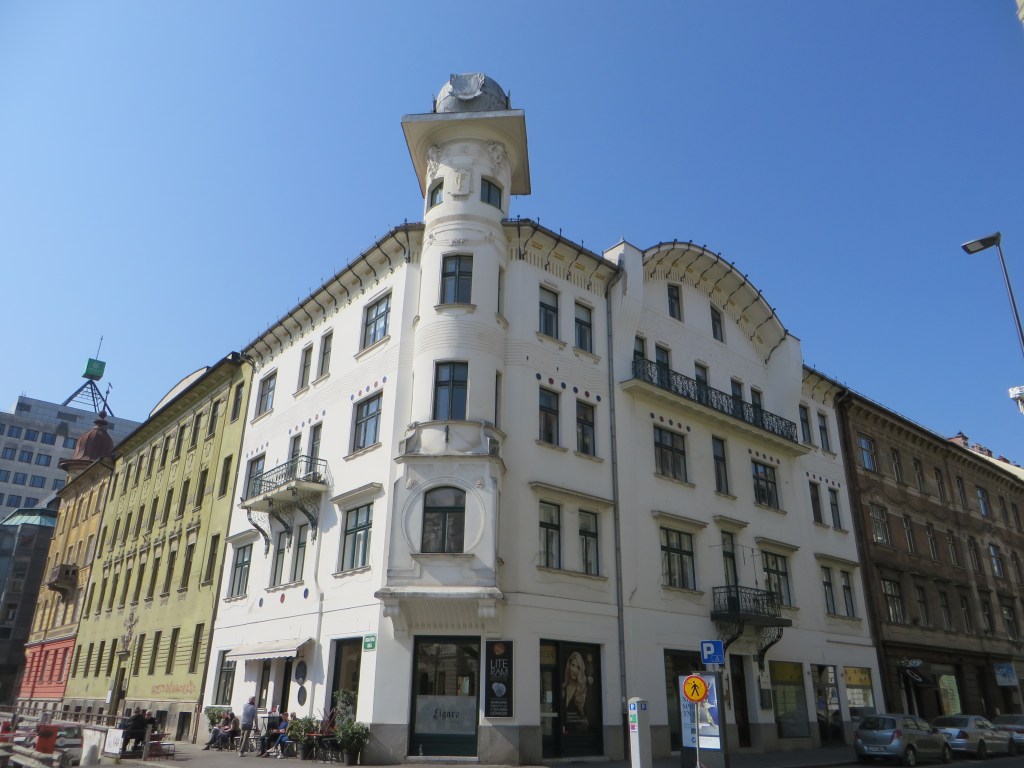


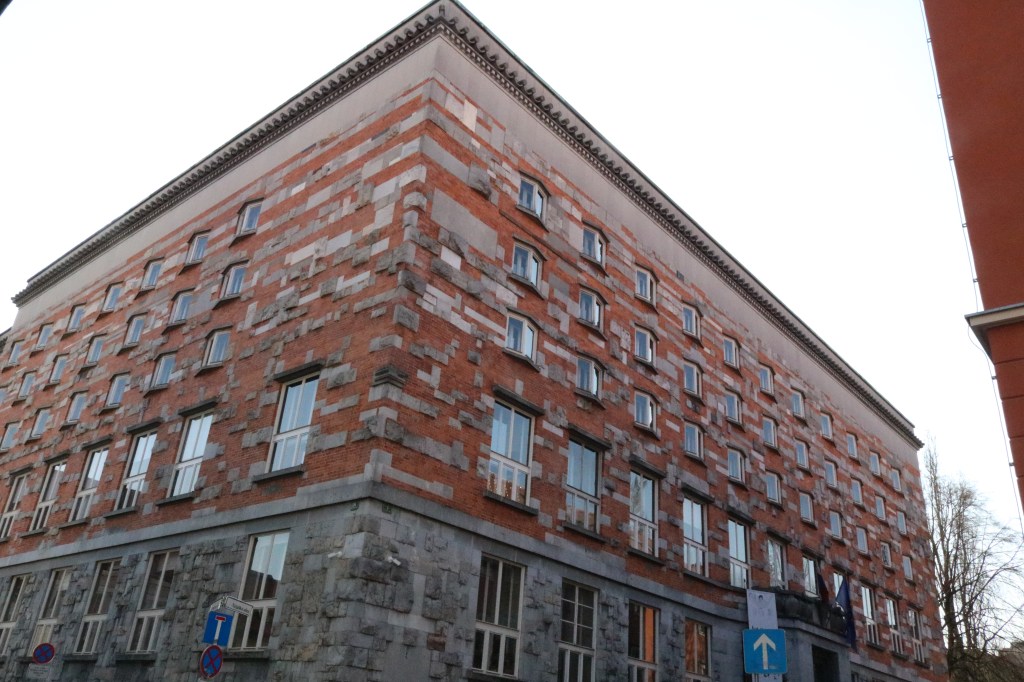
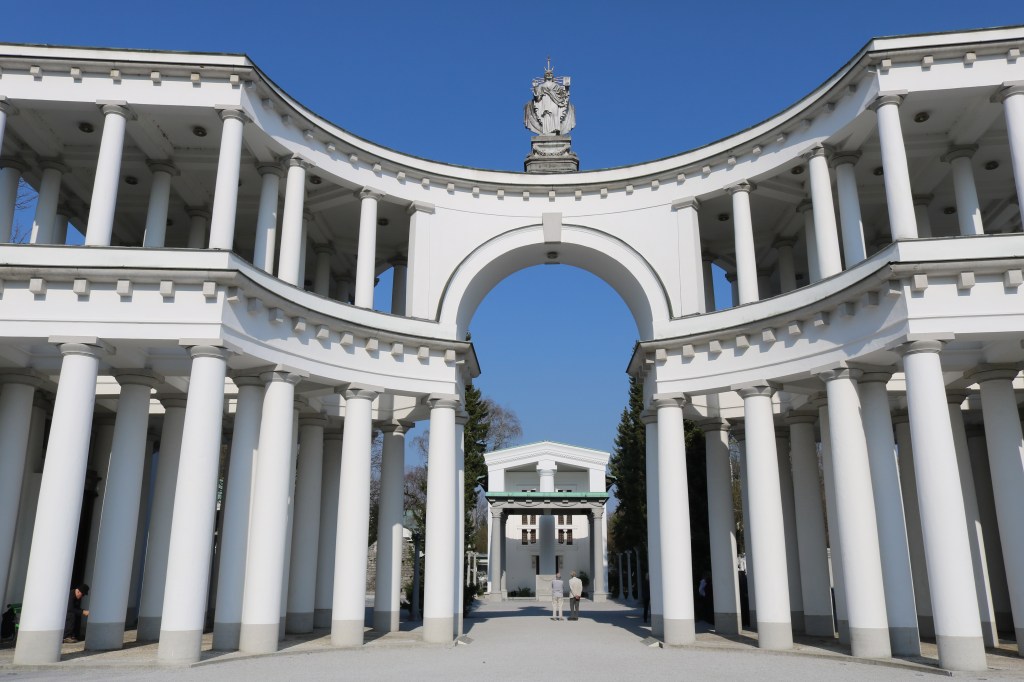



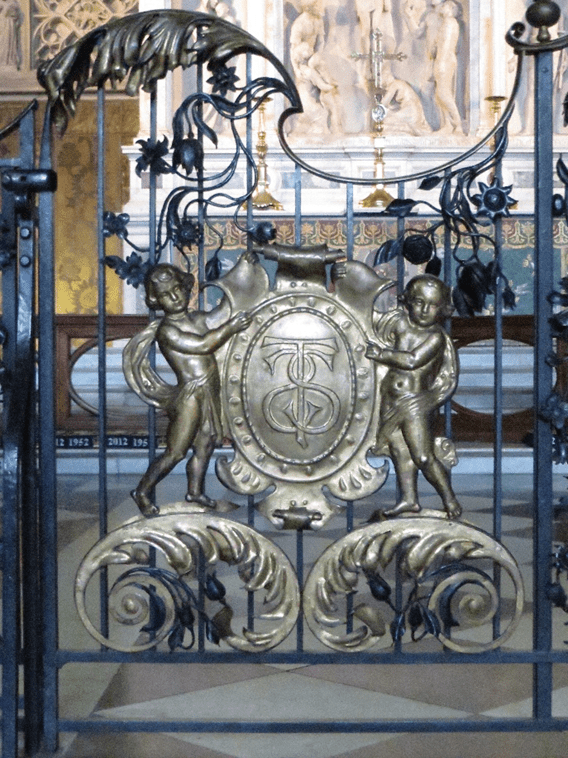
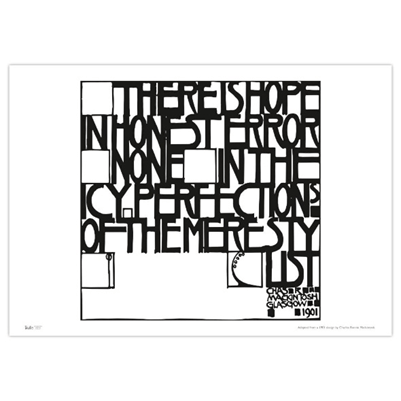
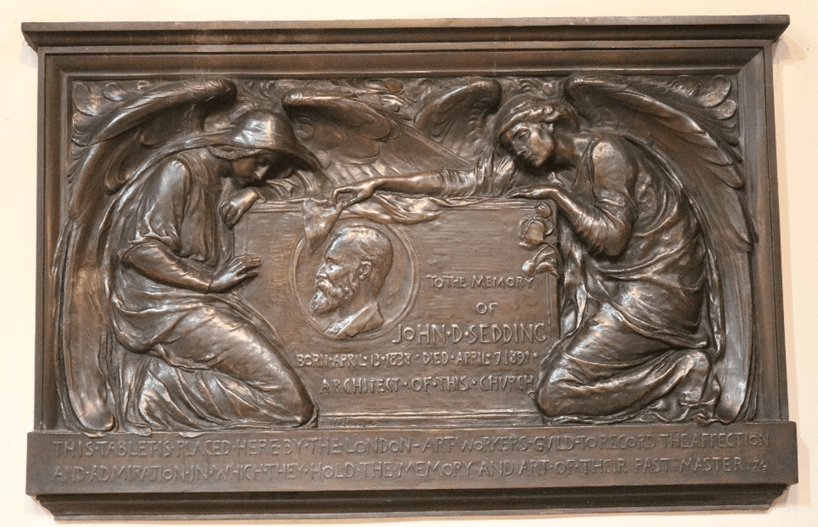
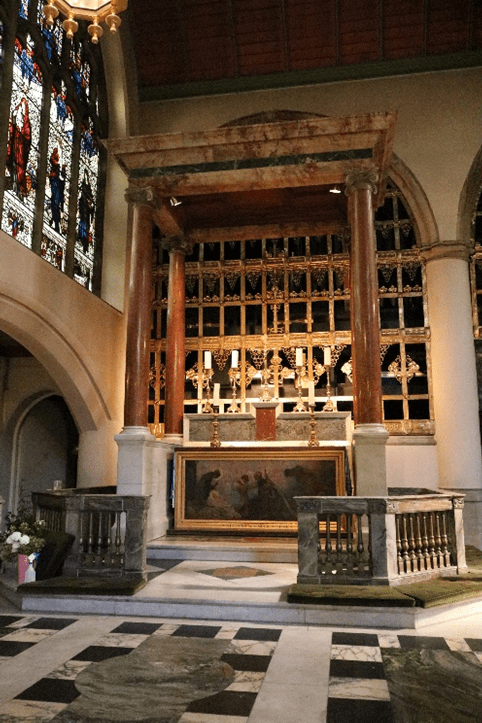

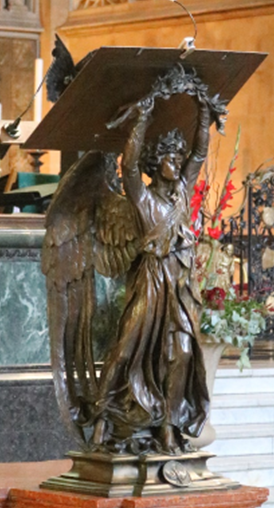

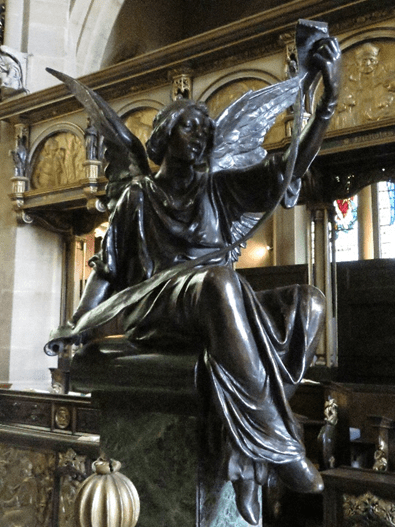
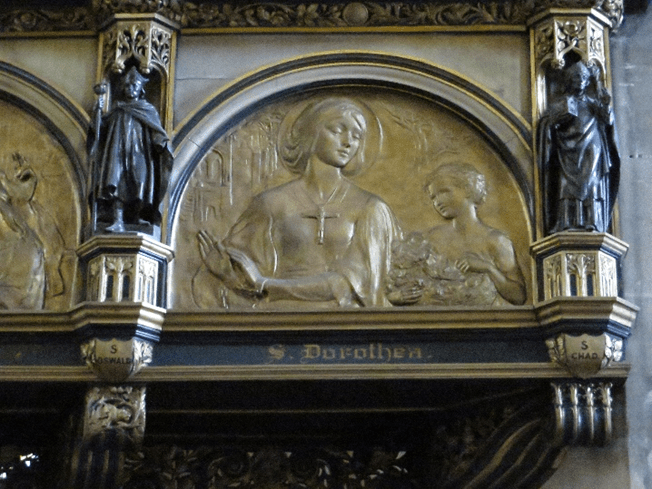
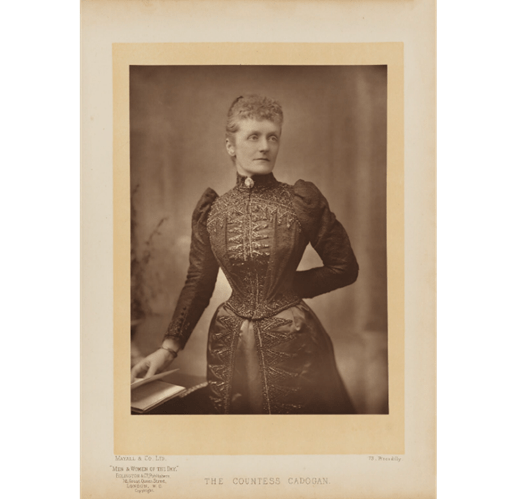
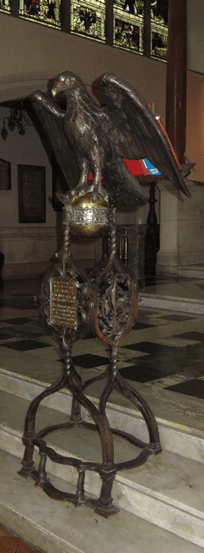
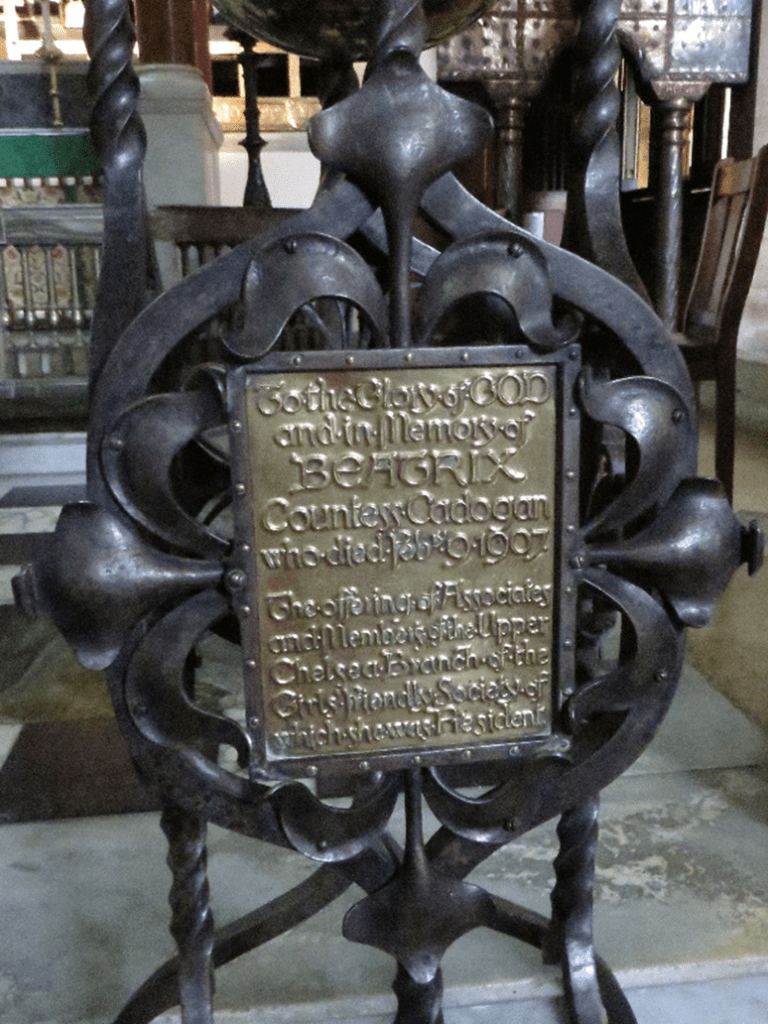

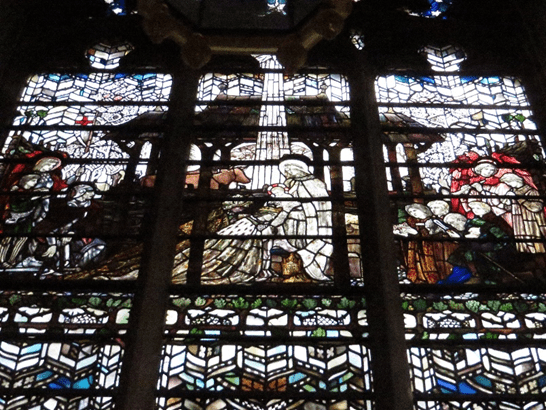

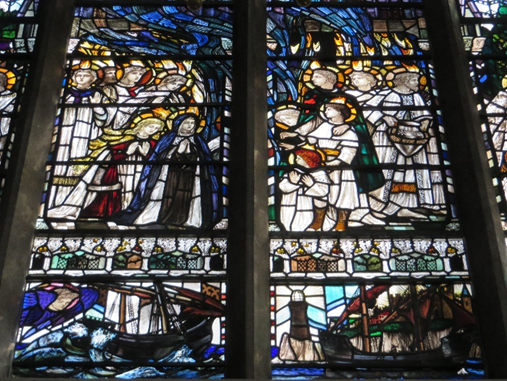


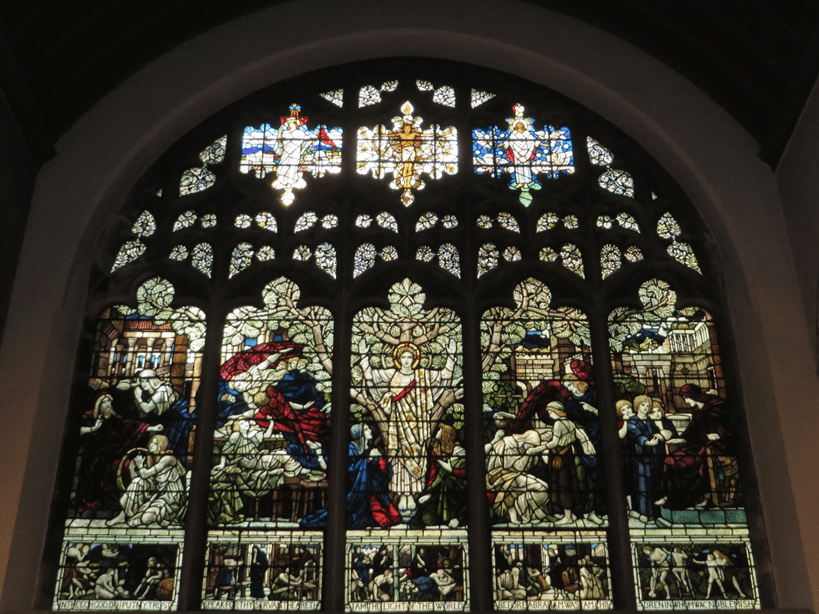

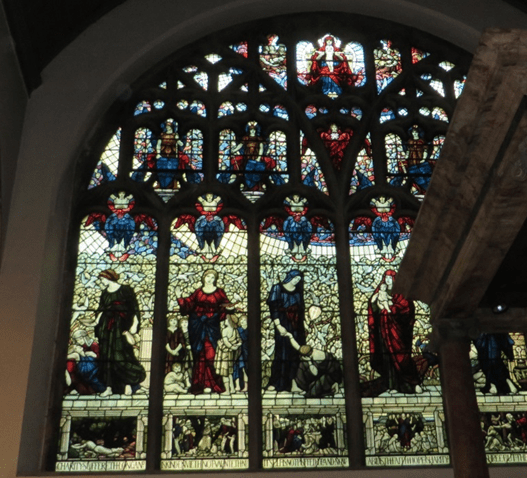


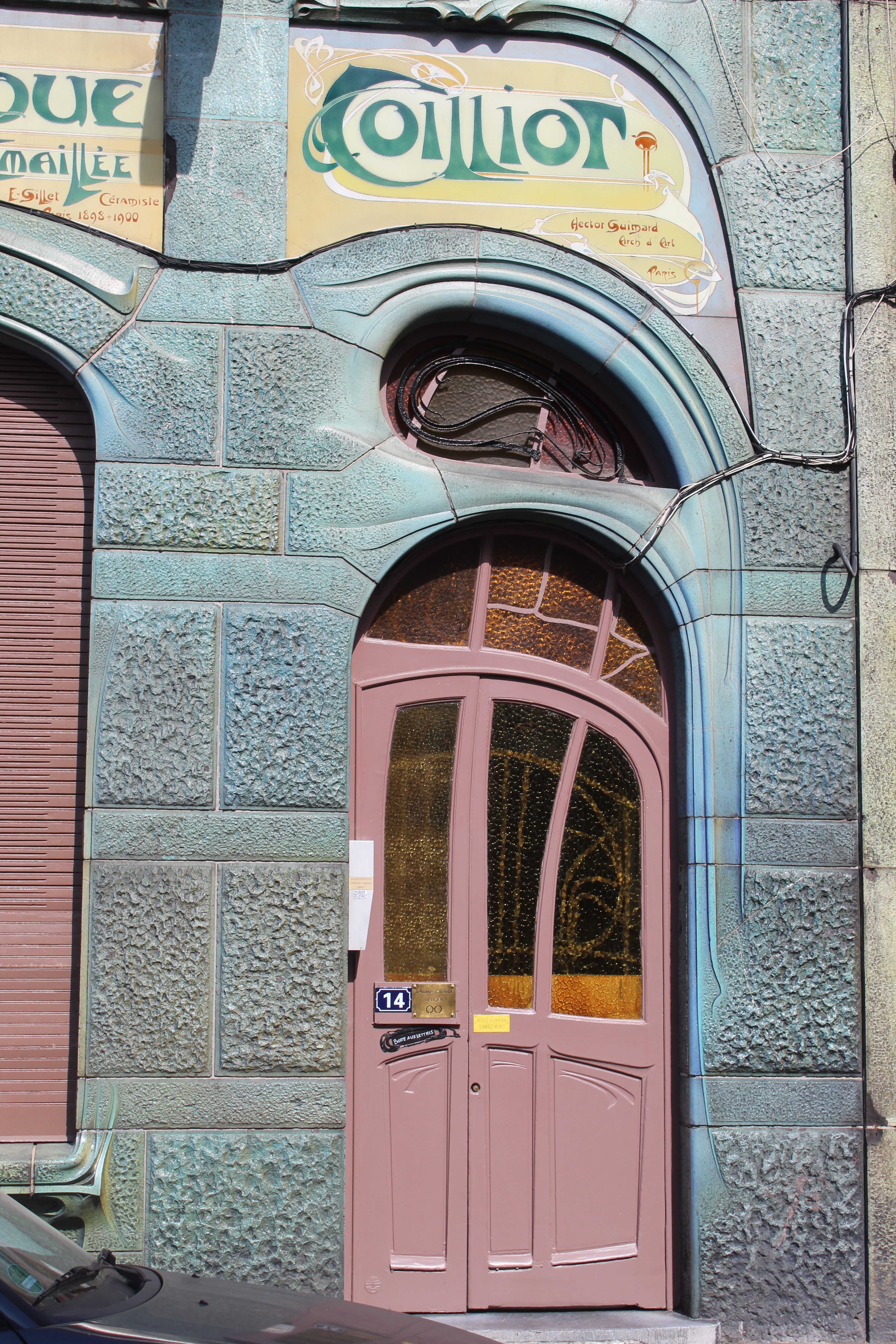

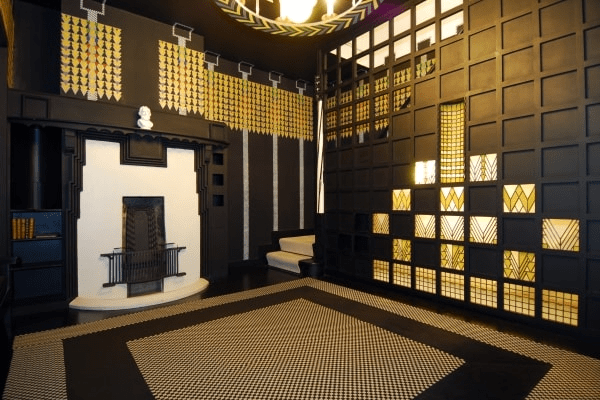

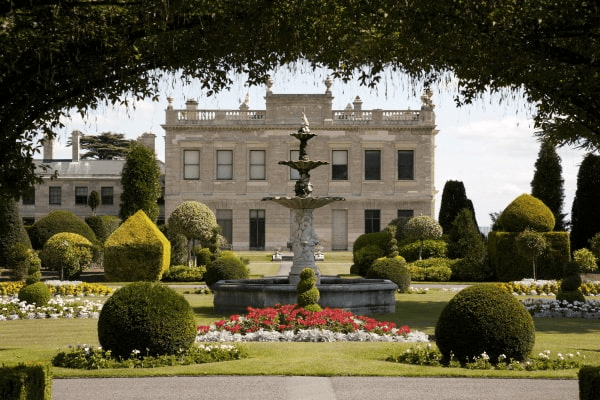

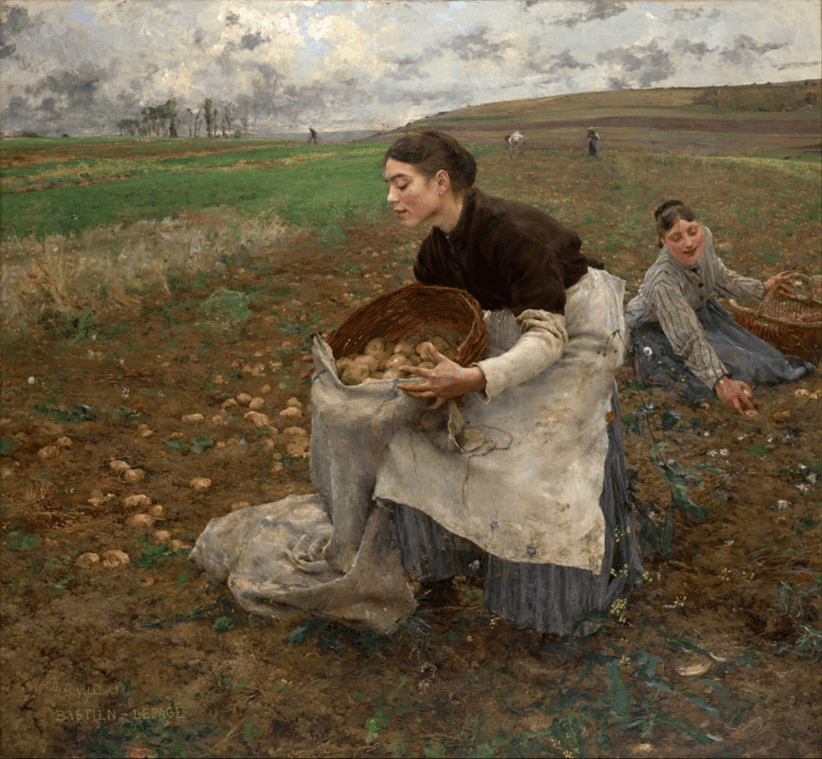

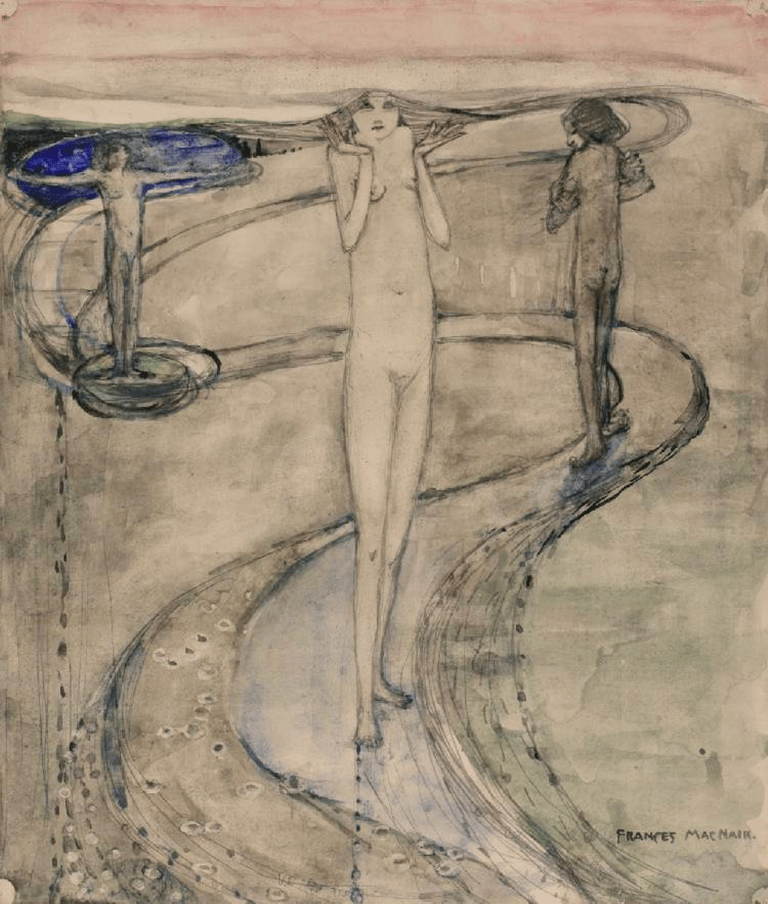

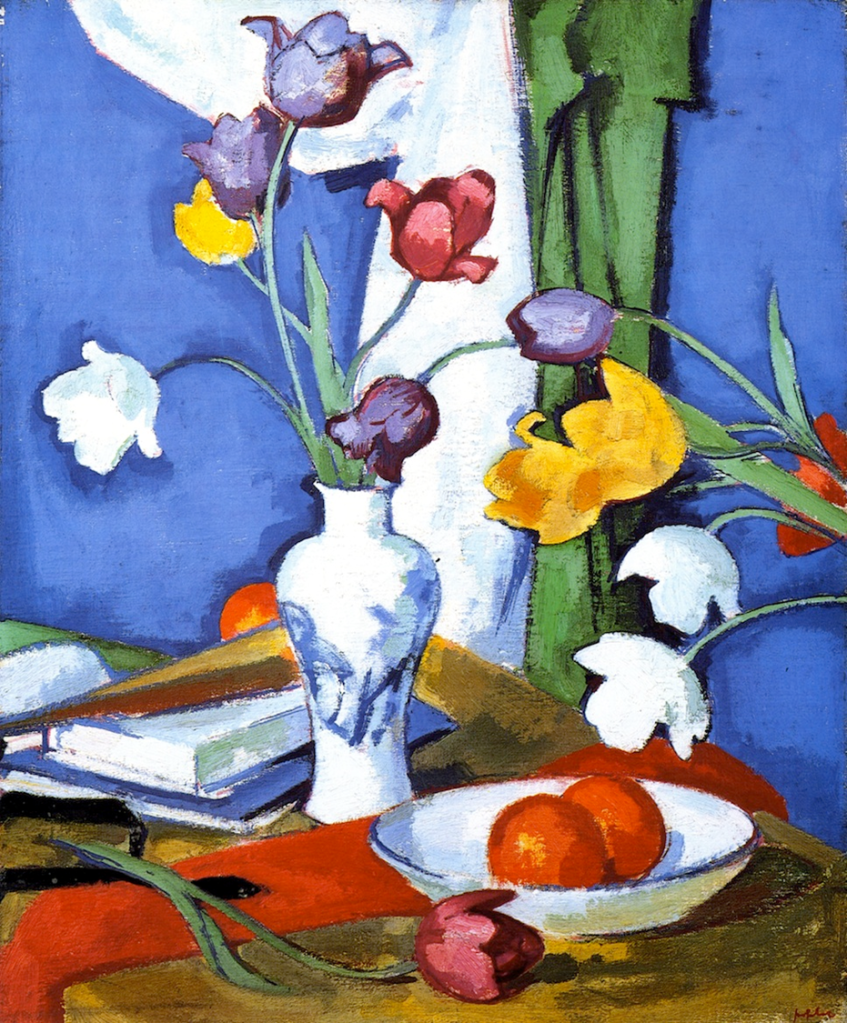
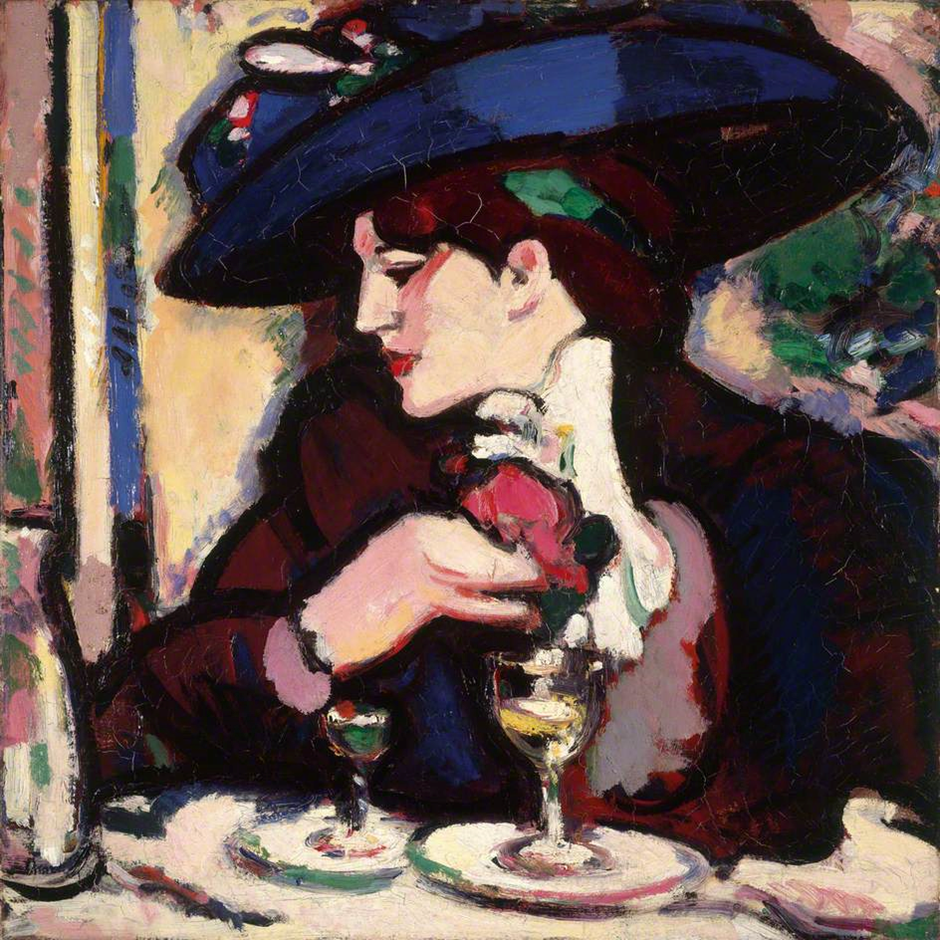
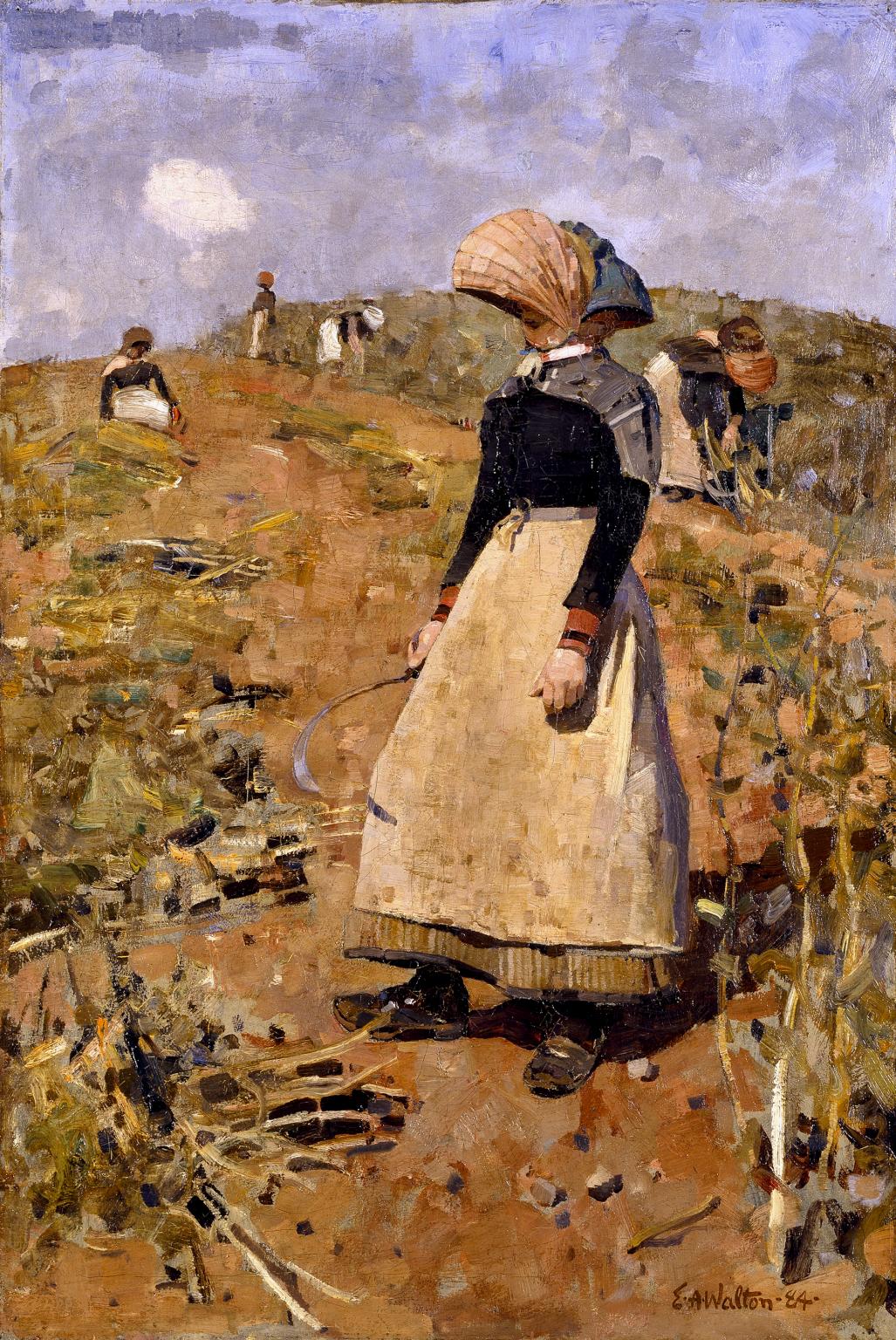

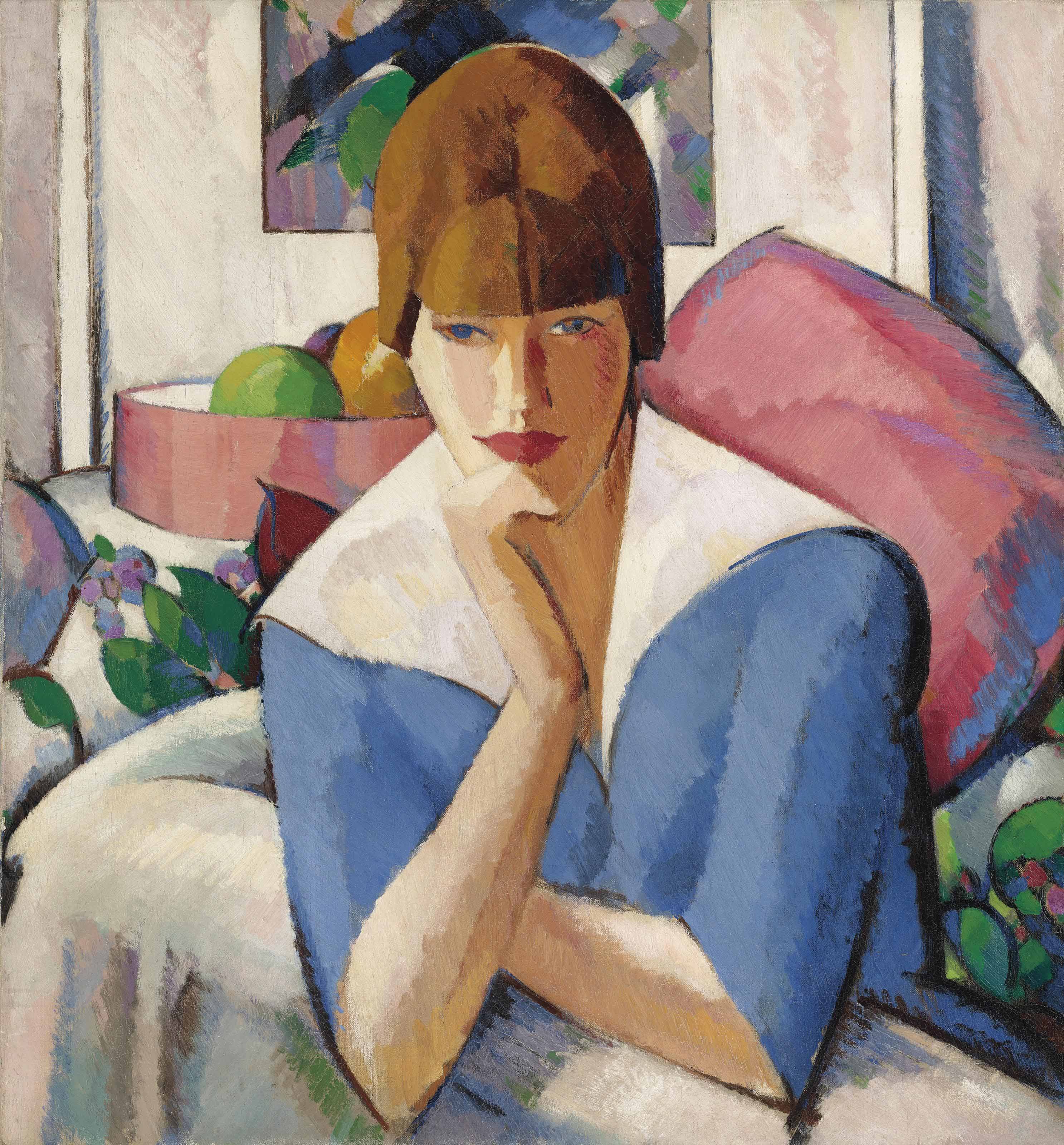
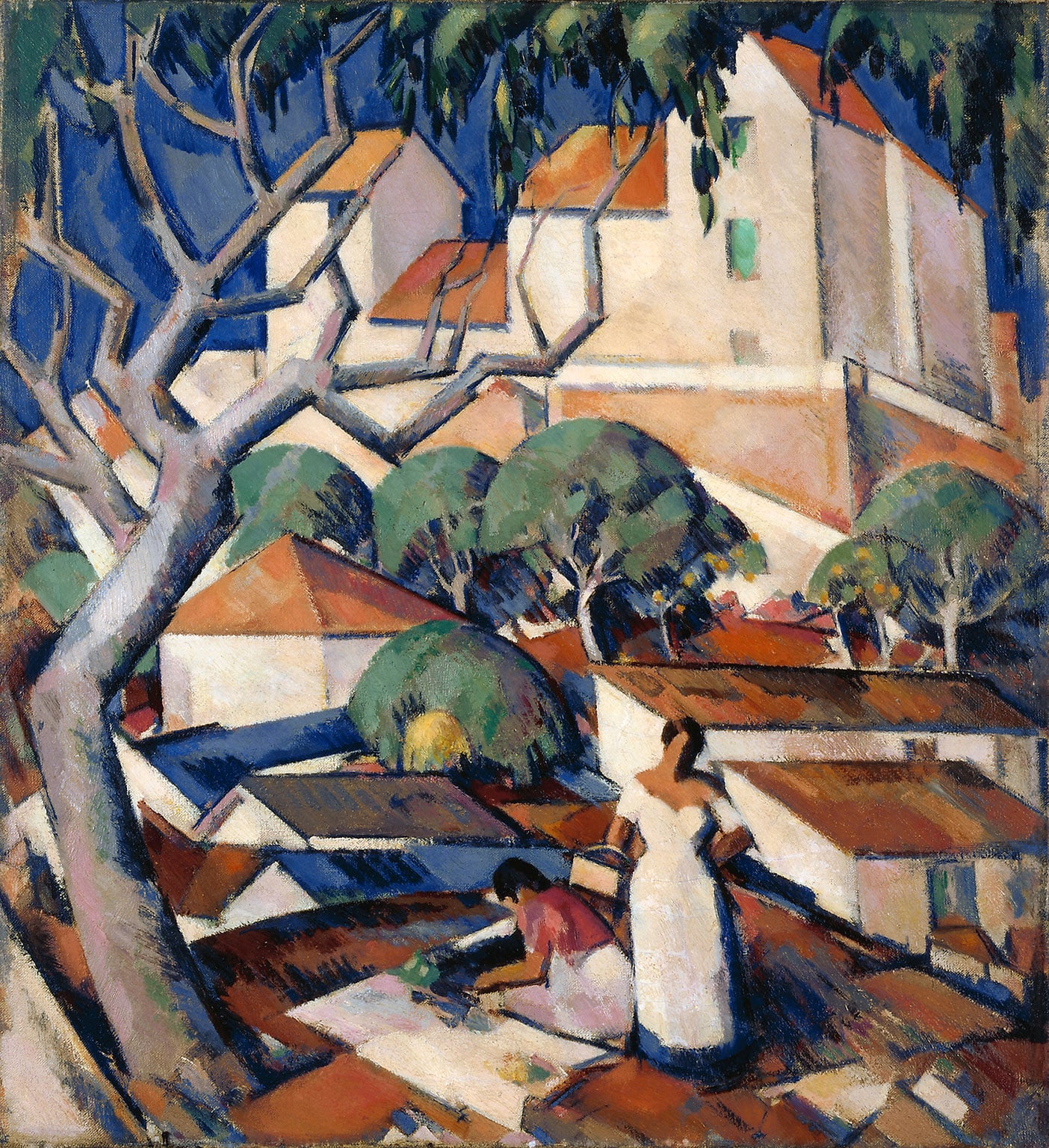


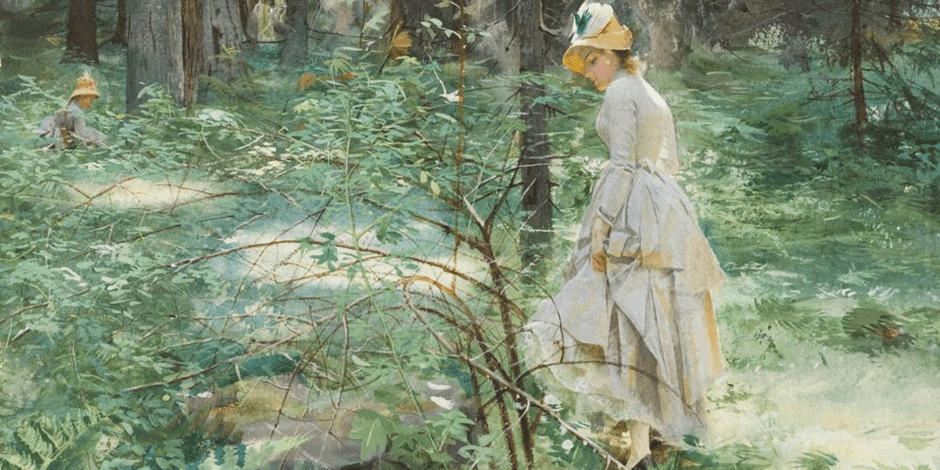
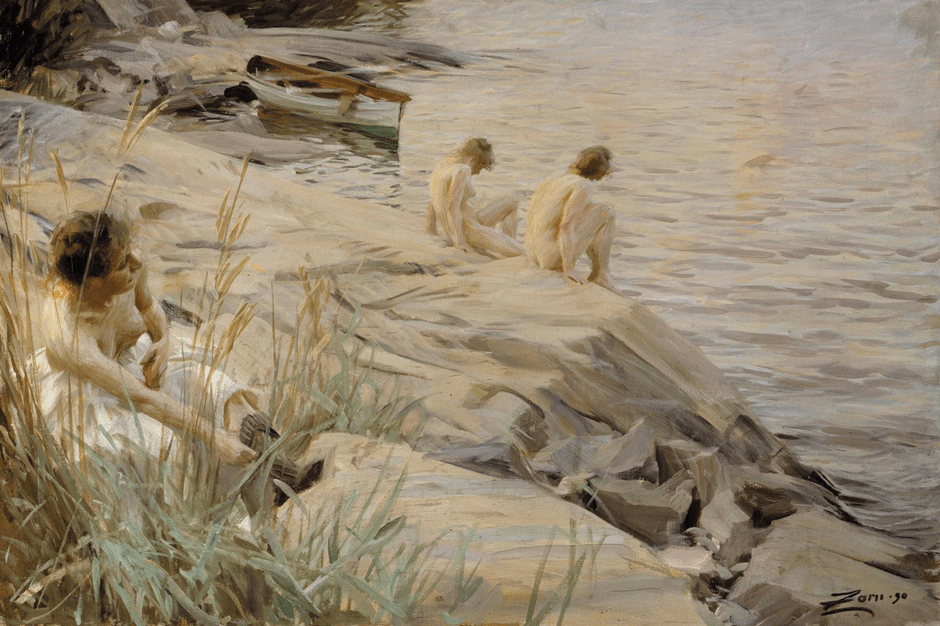


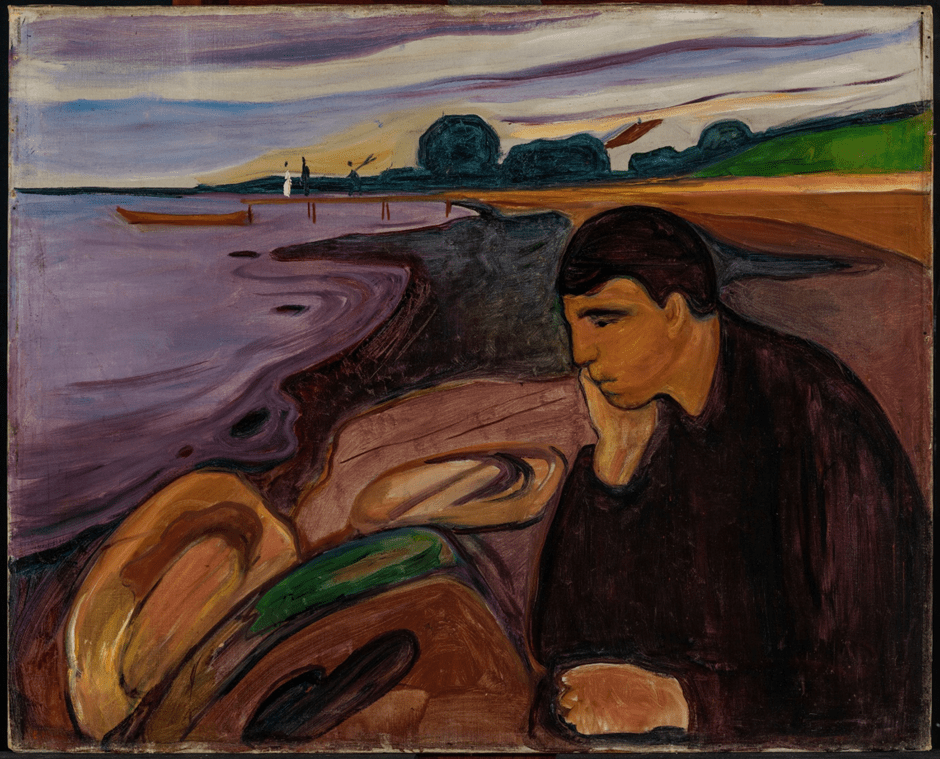
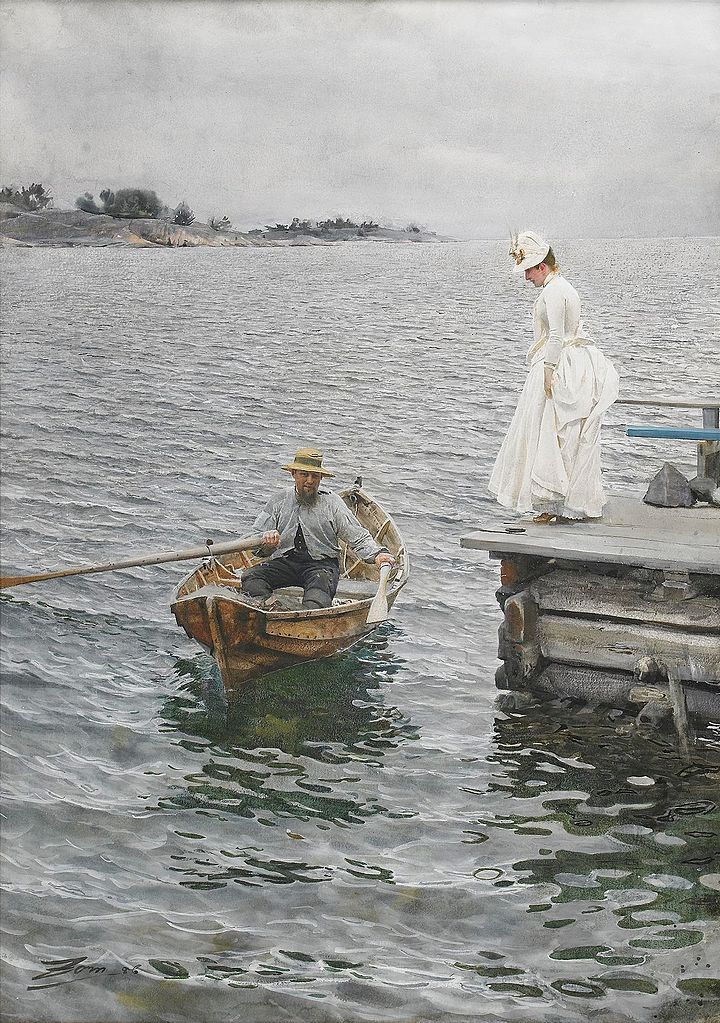

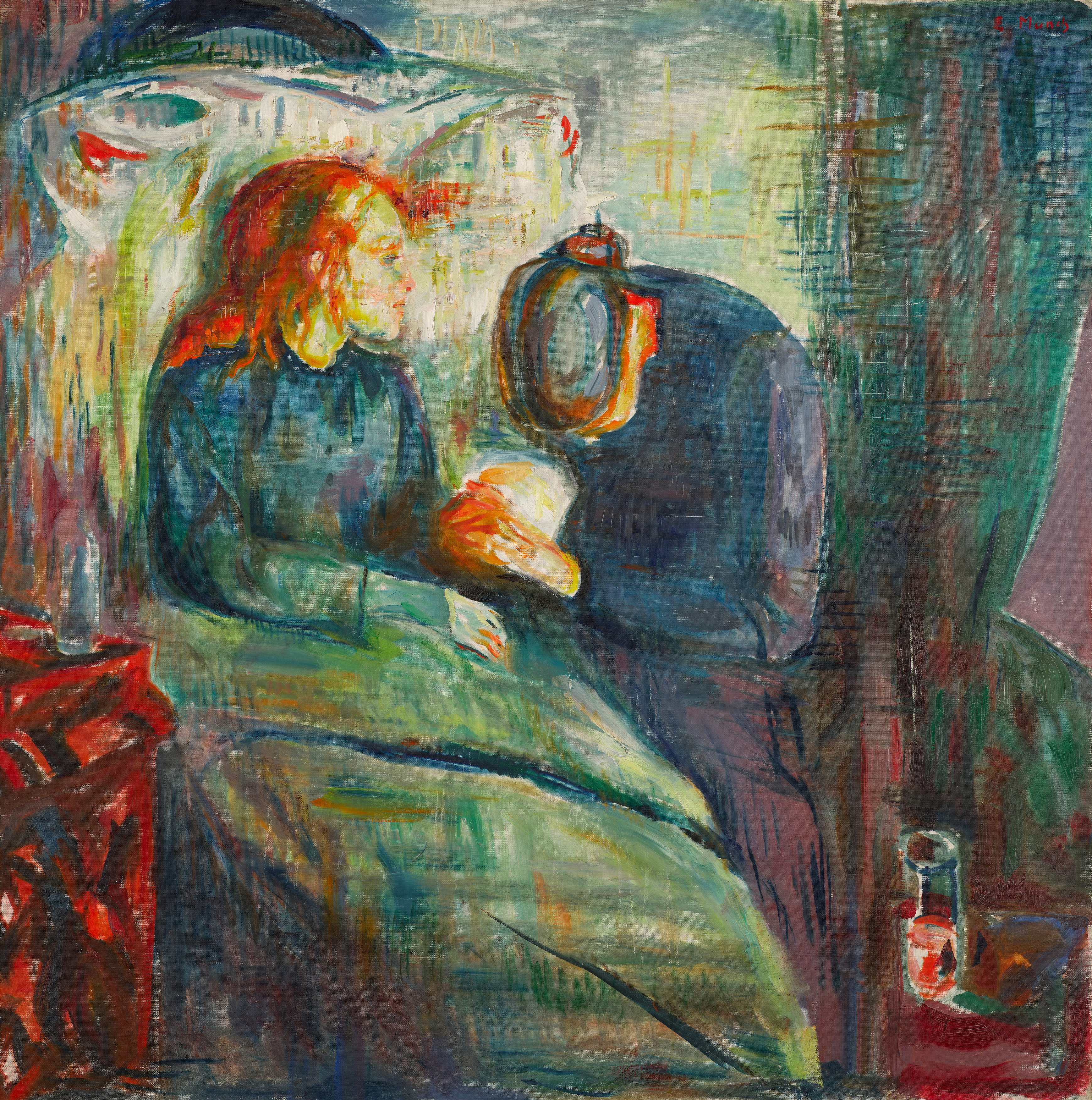
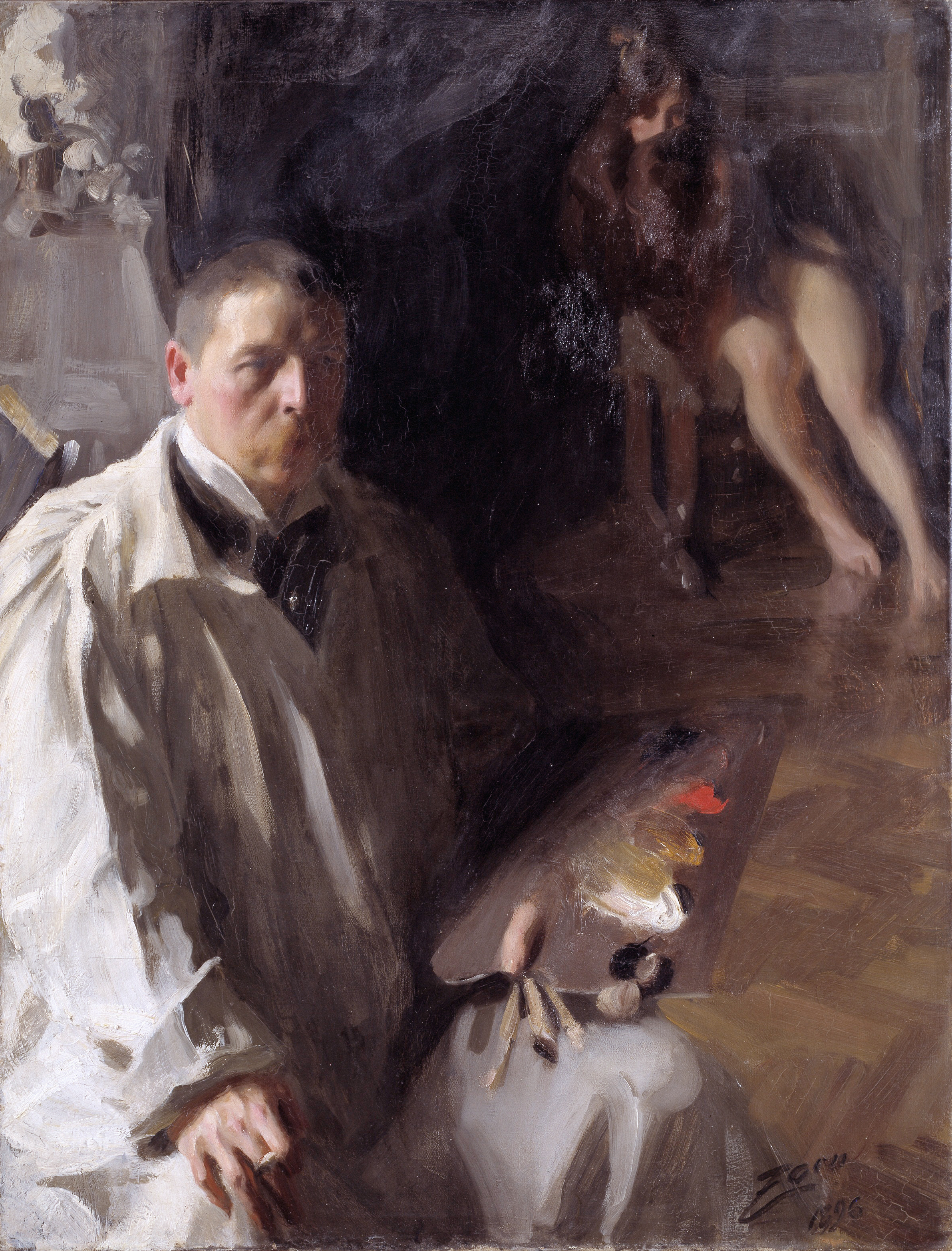
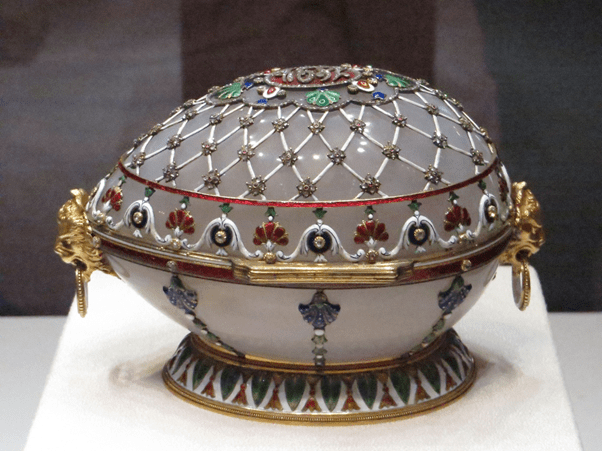


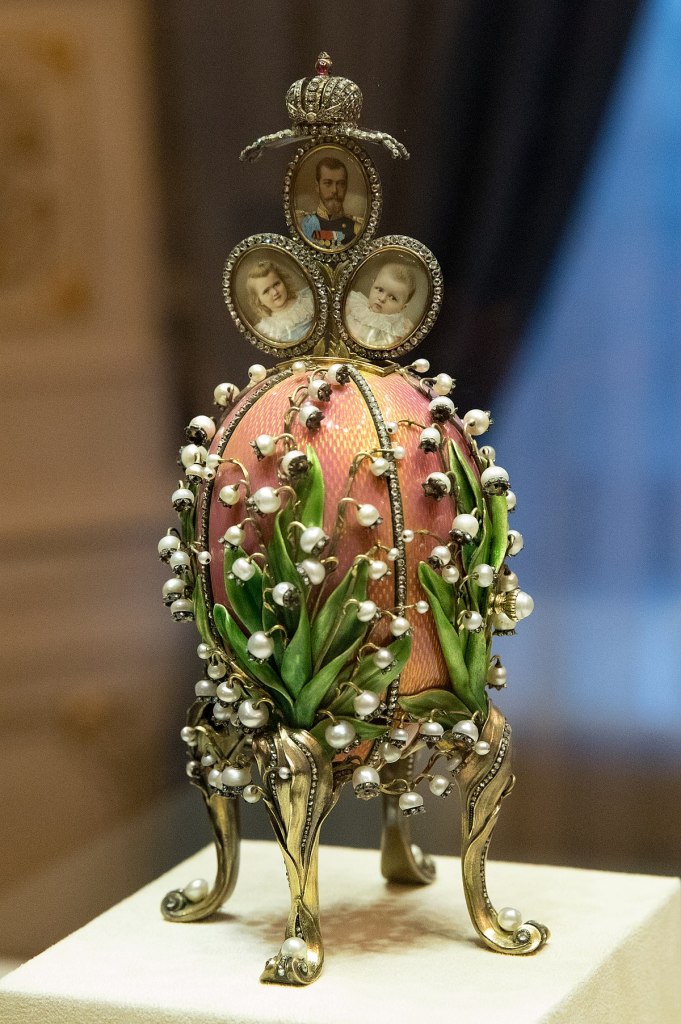

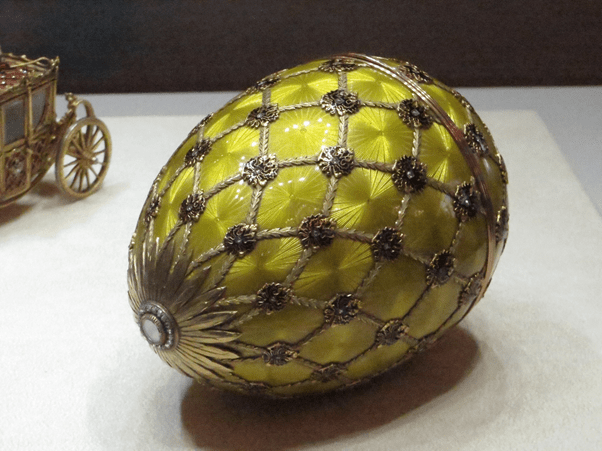

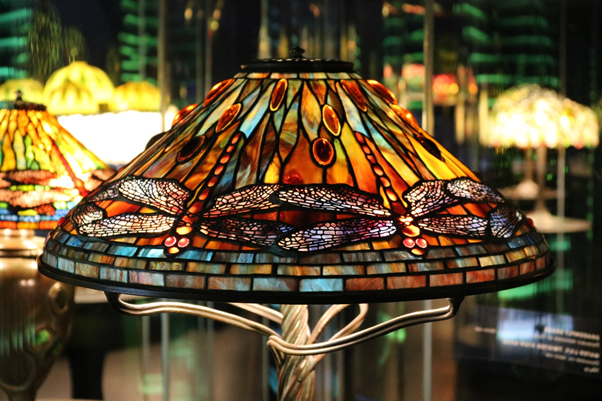


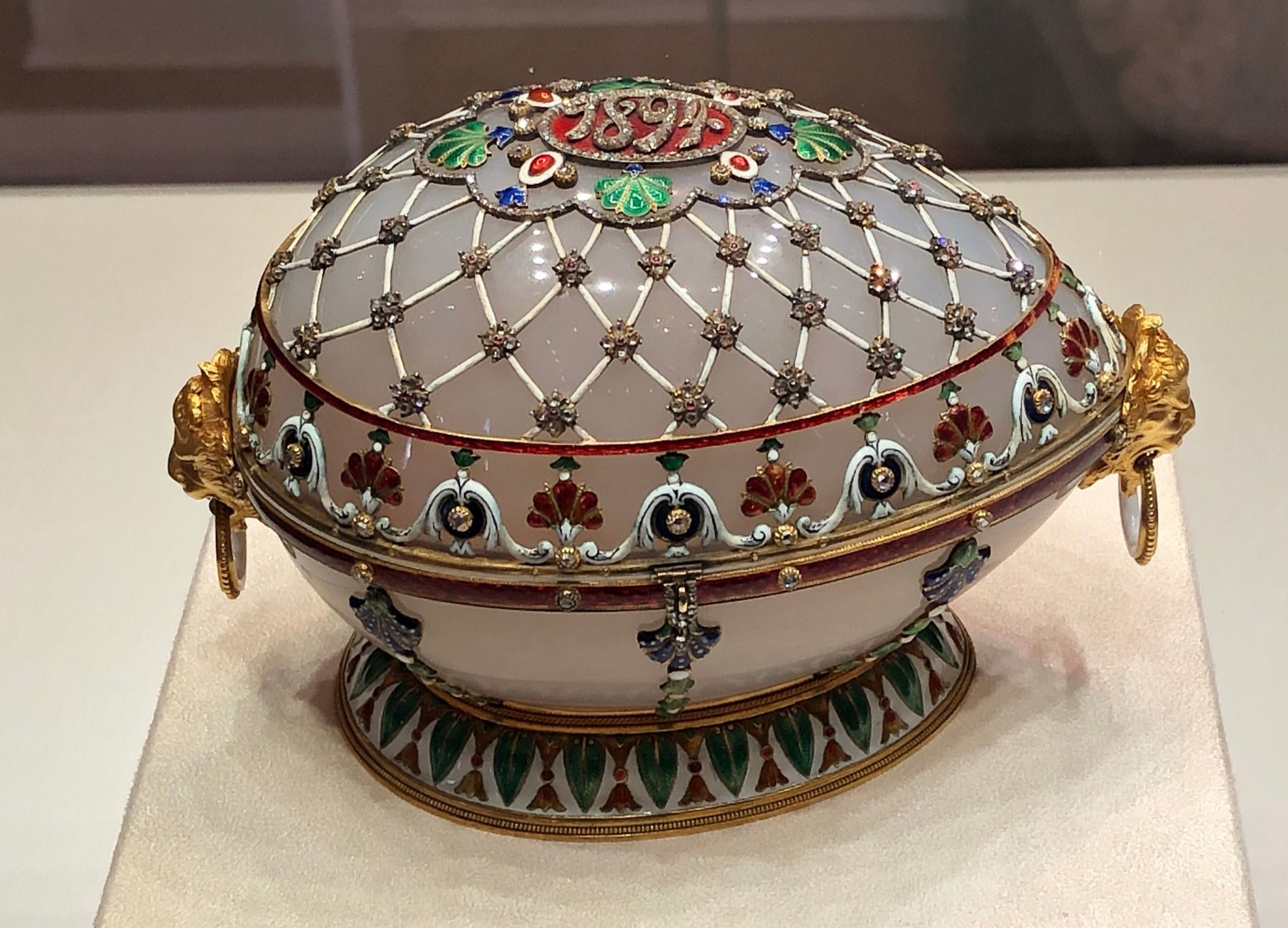

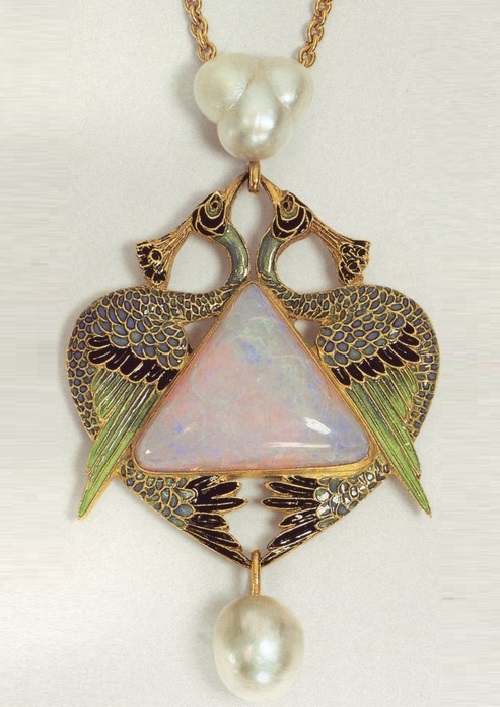


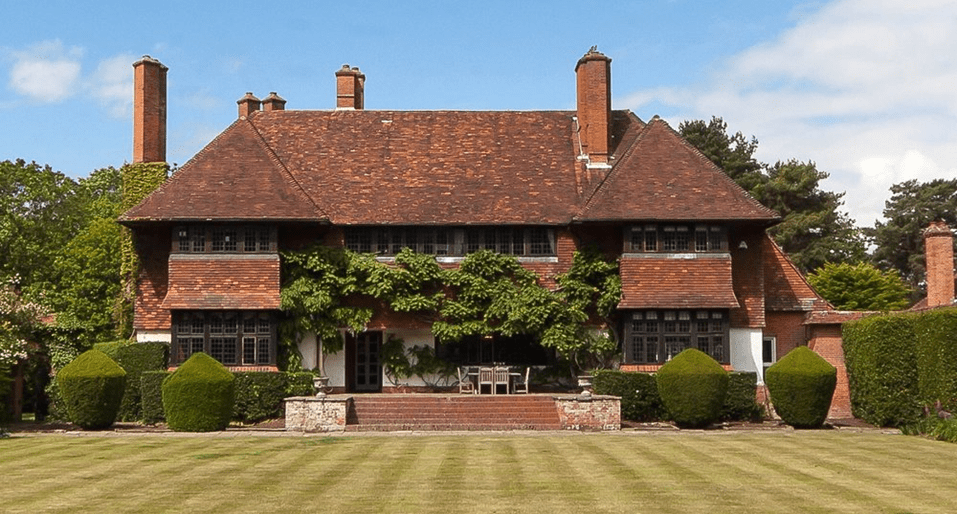
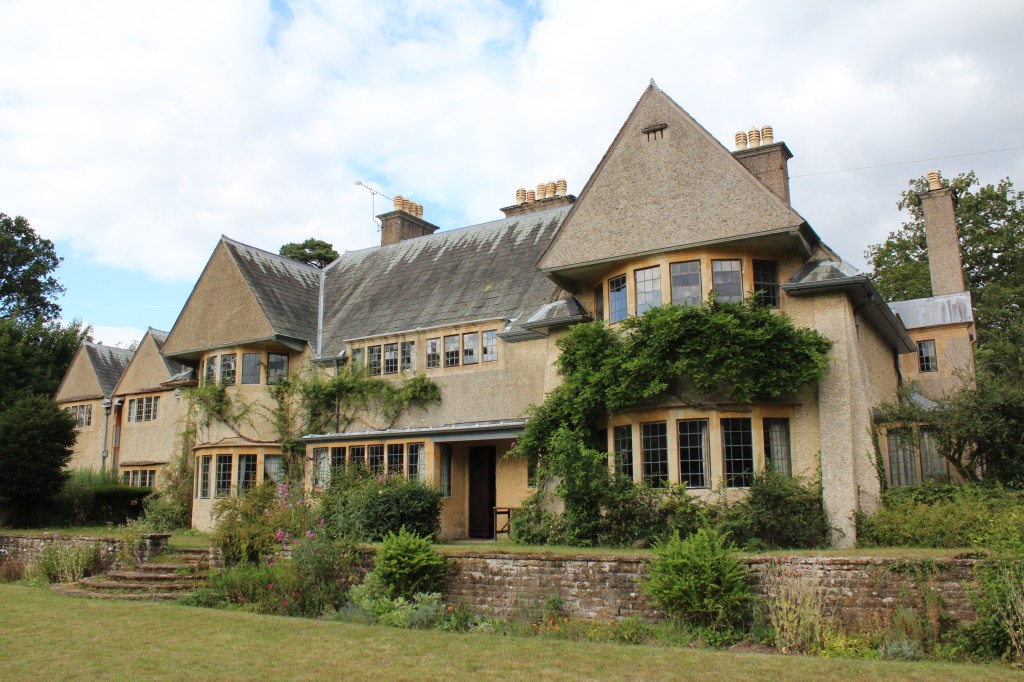
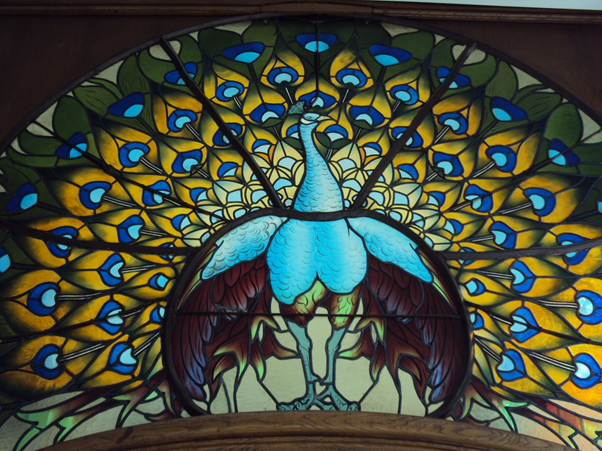


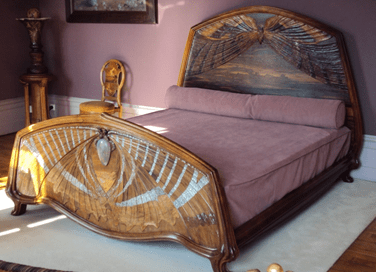
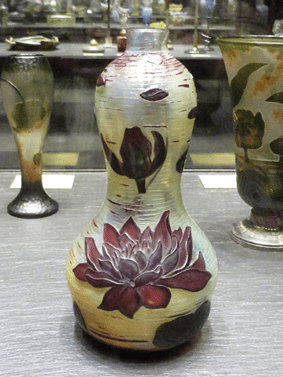


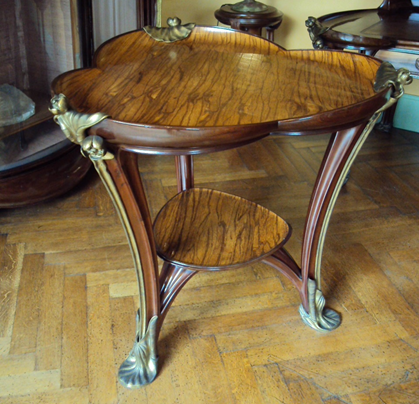

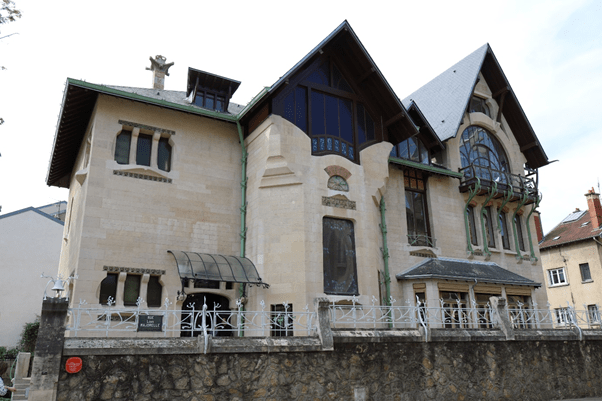


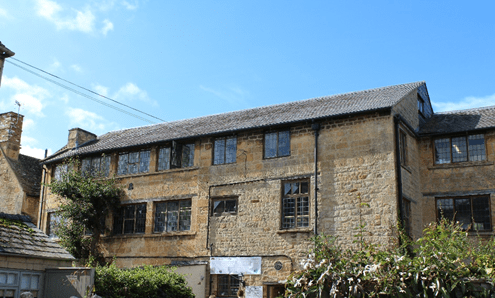


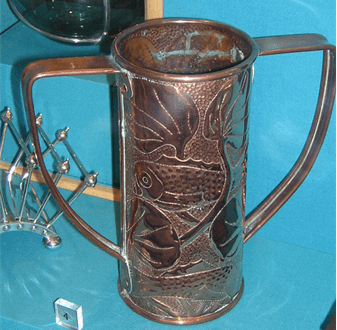

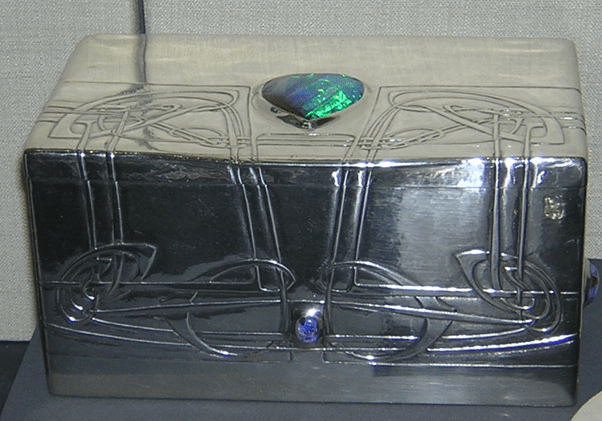

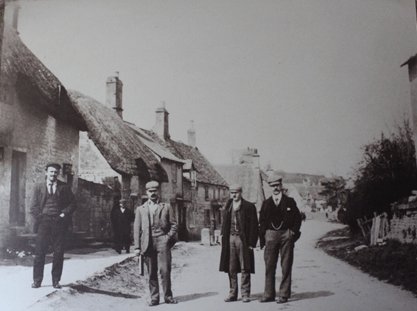
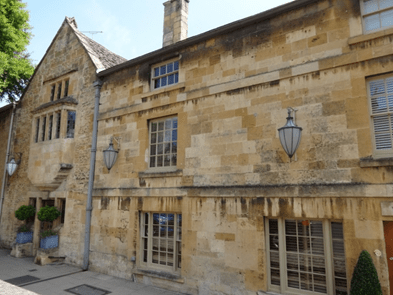
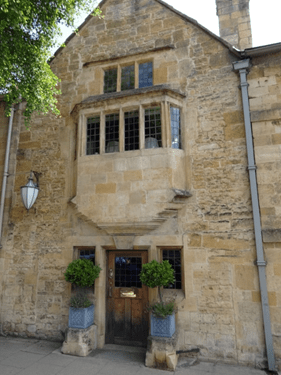
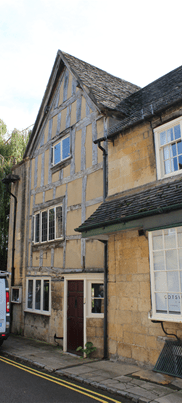

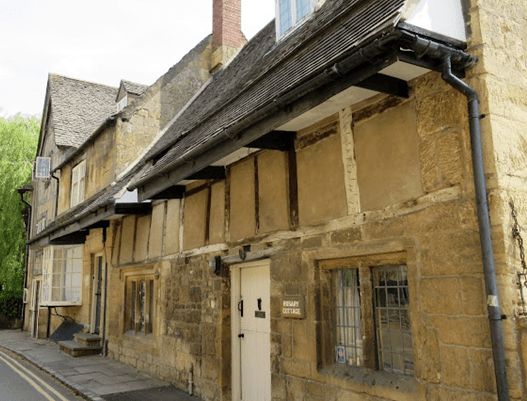

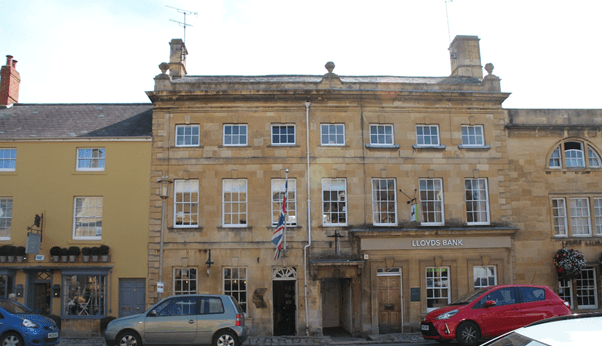


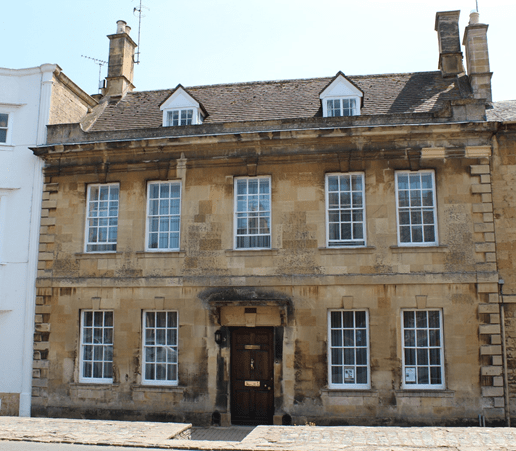
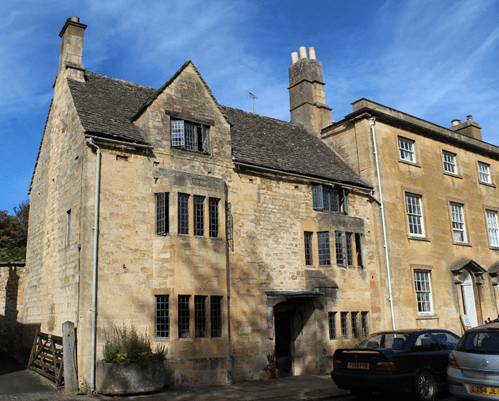

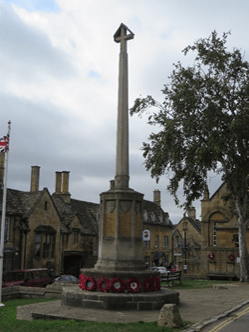


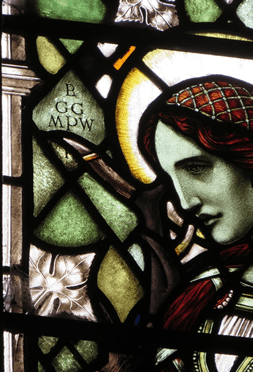
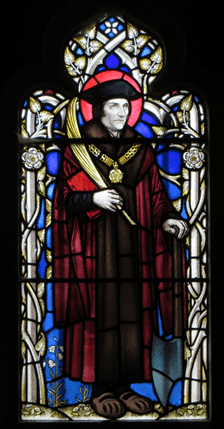
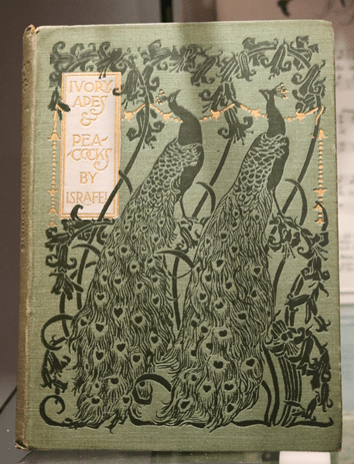

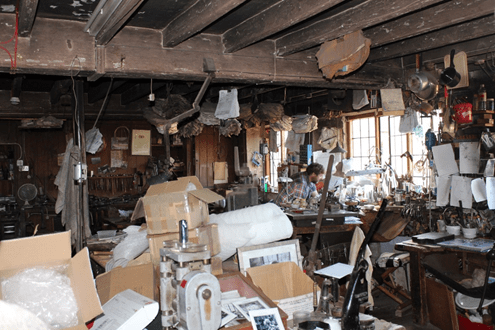


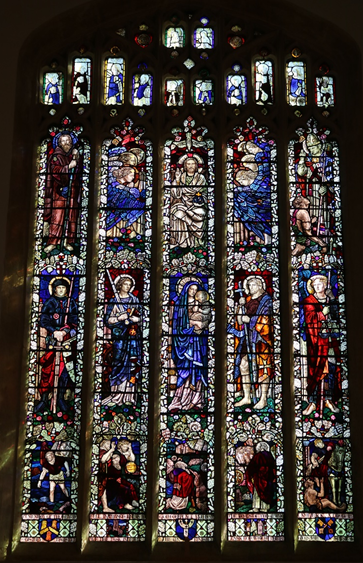
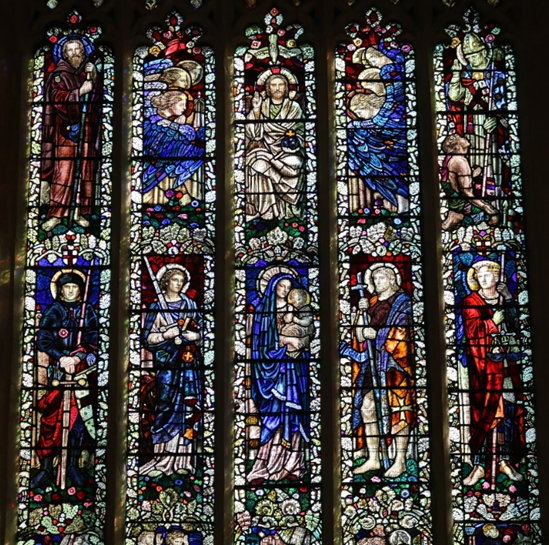
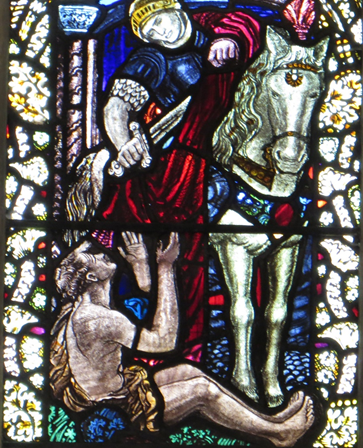
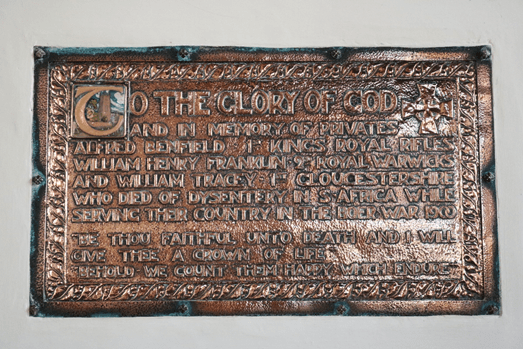
 Anne Anderson