Live lecture for May 2025
Exposition Internationale des Arts Décoratifs 1925–2025
To celebrate World Art Deco Day, 28th April 2025, let’s take tour around the Exposition Internationale des Arts Décoratifs 1925. Raise a glass to the most chic style of the 20th century!
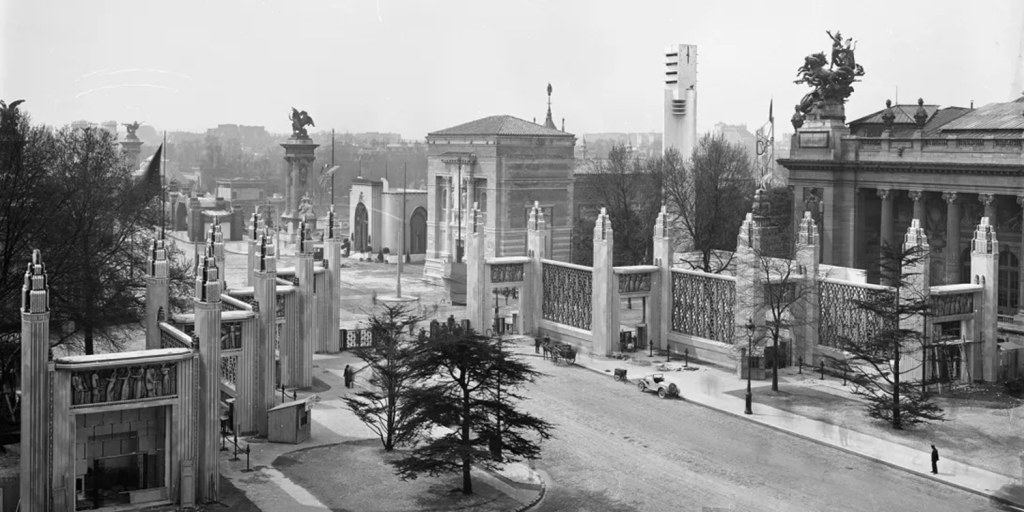
Standing at the Gate of Honour, the main entrance to the Exposition by the Grand Palais, must have been an awe-inspiring and daunting moment: there was so much to see and experience. Charles Plumet, chief architect for the exposition, had conjured up a splendid but temporary fairyland that would last for six months. The first stop on your agenda would have been the Tourist Pavilion, the first of its kind, designed by Robert Mallet-Stevens. Here there were guides and maps to orientate visitors; there were many different sections and pavilions- a total of 15,000 exhibitors from 20 countries.

The foreign pavilions, mostly contributed by European countries, fronted the Seine. Japan was among those from further afield, while the USA was marked by its absence. The first pavilion to catch your eye would have been the British Pavilion, resembling an Art Deco cathedral, designed by the London firm of John Murray Easton & Howard Morley Robertson. The interior was designed by none other than Henry Wilson, a leading figure in the Arts and Crafts milieu and Master of the Art Workers Guild. Edward Maufe was aptly awarded a silver medal for a shimmering silvered desk with tassel handles. Maufe’s wife, Prudence, was chief buyer for Heal’s in London, a store known for promoting modern style.

The pavilion of Poland, designed by Joseph Czajkowski, also had a flamboyant glass and iron tower. In an attempt to create a modern national style, the architect drew on the traditional manor houses of the Polish nobility and the Zakopane folk style associated with the Carpathian Mountains! Very romantic. The octagonal hall, supported on wooden pillars, had a stained-glass skylight, and was filled with statuary and tapestries.

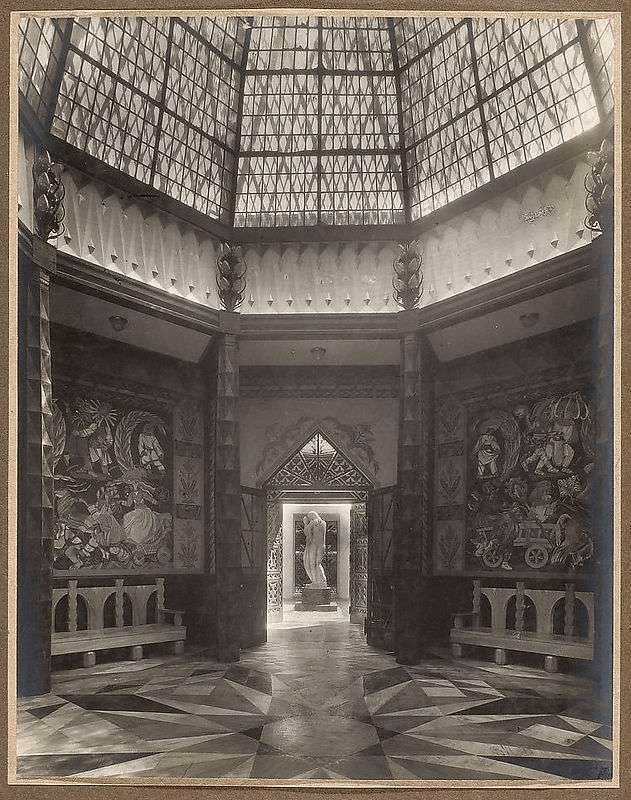
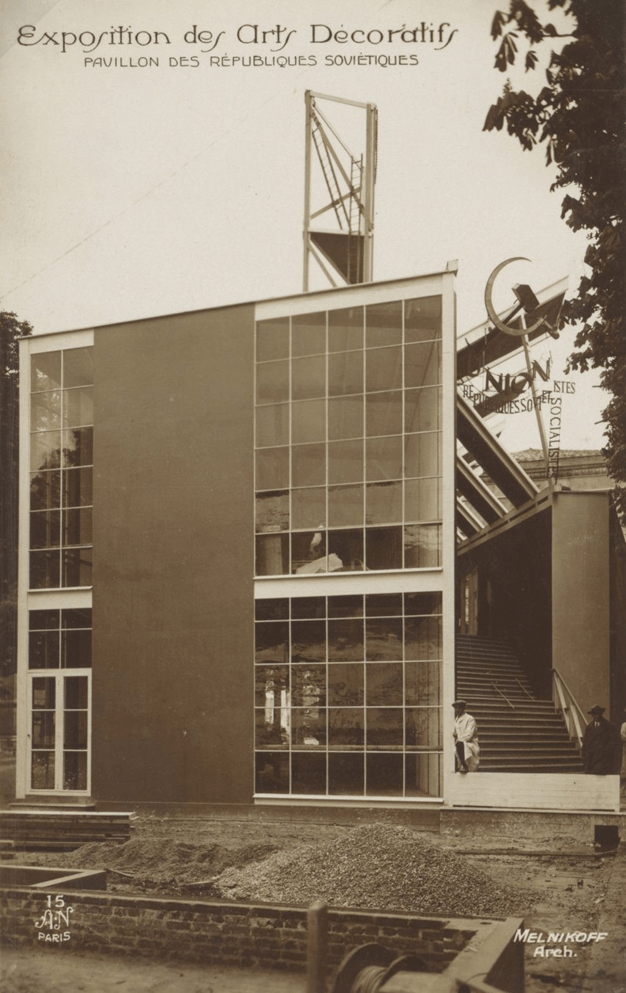
In sharp contrast the Pavilion of the Soviet Union was inspired by Russian Constructivism. Konstantin Melnikov, who had recently designed the new central market in Moscow, created a daring design: the roof over the stairway was not continuous, but was made up of planes of wood suspended at an angle, which were supposed to let in fresh air and keep rain out, but visitors were often drenched. The intent was to attract attention, and it certainly succeeded; it was one of the most talked-about buildings.
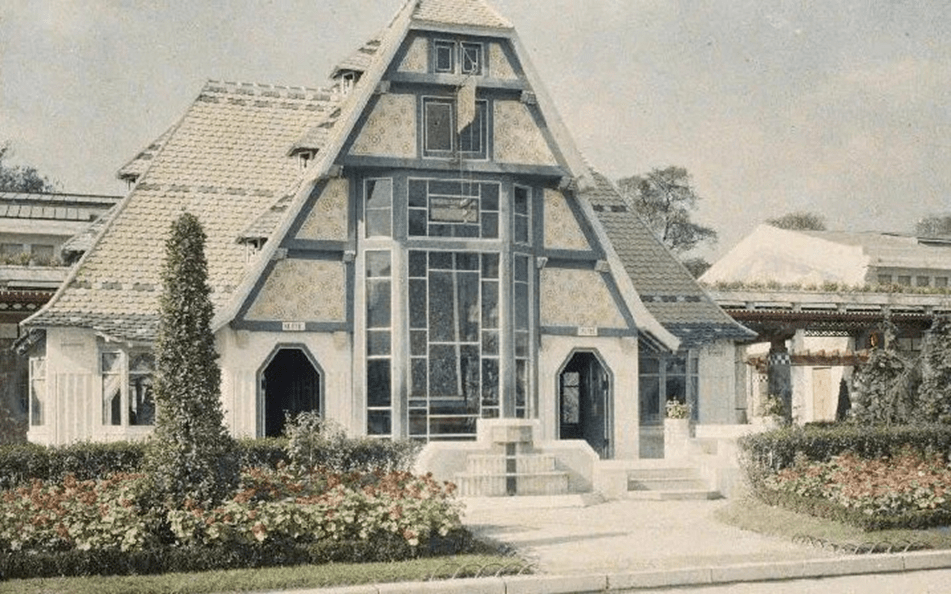
Two-thirds of the exposition was dedicated to French participants, with pavilions representing regions and towns: Pavilion of Lyon and Saint-Etienne designed by the Lyon architect Tony Garnier and Le Pavillon de Mulhouse by André Vendre.
The department store pavilions, along the Grand Esplanade were spectacular: Louis Boileau’s Pomone pavilion for Bon Marche and the Galleries Lafayette La Maitrise pavilion by Joseph Hiriart, Georges Tribout and Georges Beau.
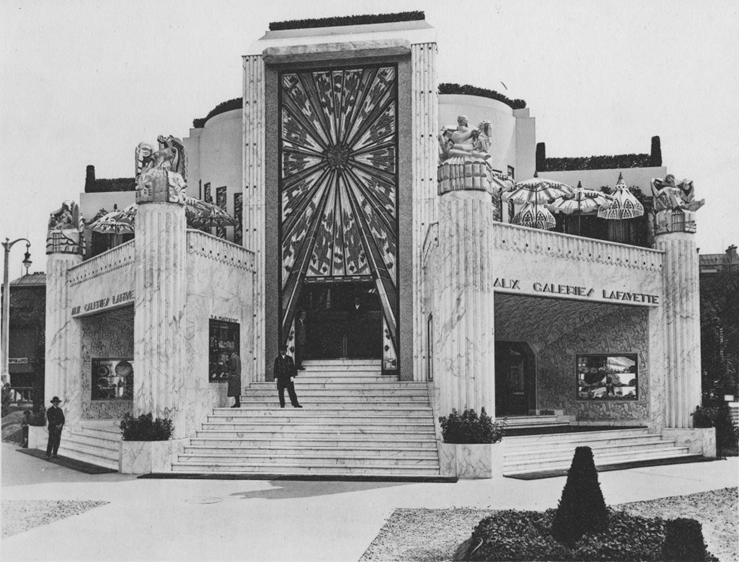
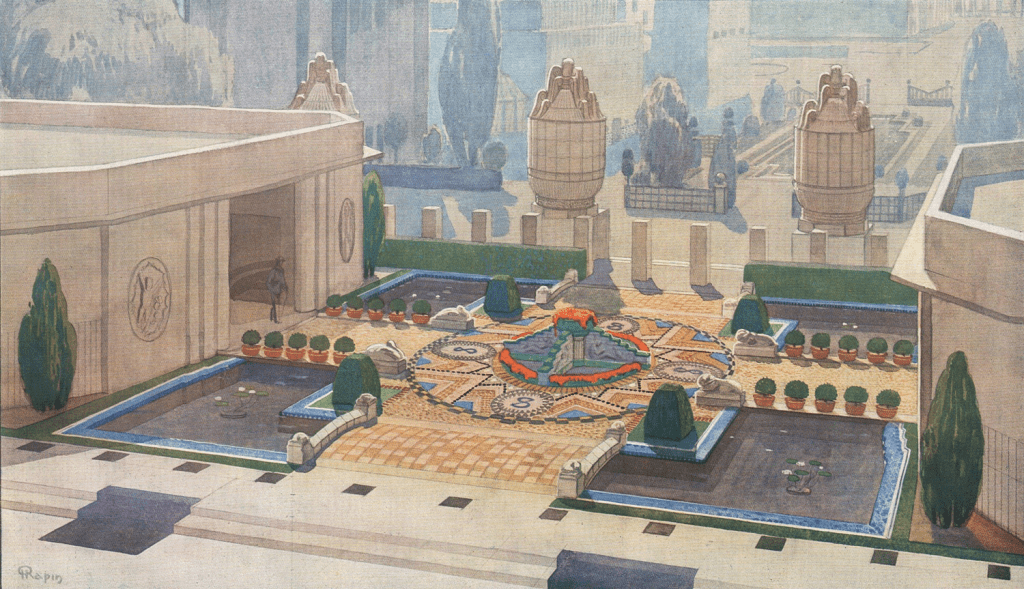
Imagine popping into the Sevres Pavilion, designed by Henry Rapin, or the Lalique Pavilion which fronted his dramatic illuminated fountain celebrating the rivers of France.
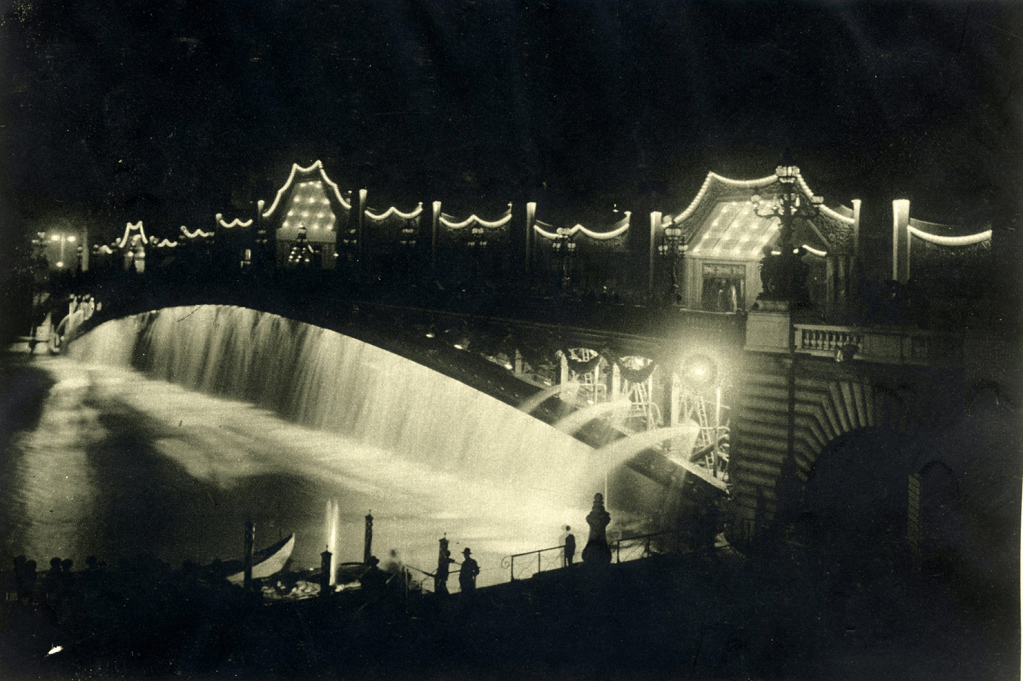
At night the exhibition was a glimmering fairyland of fantasy and hedonism.
Join me on Friday 16th May 2025 at 11am (GMT) or 7pm (GMT) for a live lecture exploring the delights of Paris 1925.
You can book this live lecture for either the morning or the evening presentation.
Please state your preferred time, Morning Lecture or Evening Lecture, for the zoom link as they different codes.
Once you register and pay, you will be sent a separate email with your link. You will need this link to access the lecture on the day so please do not delete it.
As the lectures will be delivered live by Zoom, you will be able to ask your questions in person at the end. You can also use the ‘Chat’ function.
After the lecture you will be sent another private link so you can access the lecture on my YouTube Channel.
To book your place please email Susan Branfield at susanbranfield77@gmail.com
You can pay by cheque or BACS (details will be supplied). Cheques should be made payable to ‘Anne Anderson’.
Or you can pay by PayPal

Lecture Paris 1925
Tour of Paris 1925
£10.00
 Anne Anderson